
Ford Ranger 3.2 (P5AT) Tuning & Calibration
The PX Ranger's 3.2 five-cylinder is one of the most-worked diesels on Australian roads. A calibration built around exhaust temperature is what lets it tow and tour harder while staying safe.
Ford Ranger PX 3.2L P5AT 5-Cylinder Turbo-Diesel
The Ford Ranger PX/PX2/PX3 3.2-litre P5AT five-cylinder turbo-diesel (shared with the Everest and Mazda BT-50) is calibrated with a custom diesel file focused on EGT-safe fuelling, variable-geometry turbo boost control, and towing and throttle response. Every calibration is developed from the stock read and validated against logged exhaust temperature, boost and rail-pressure data before sign-off, with the DPF kept functional.
What the Ford Ranger 3.2 (P5AT) needs from a calibration
The 3.2-litre P5AT is the five-cylinder turbo-diesel behind the PX-generation Ranger — Australia's best-selling ute for much of its run — and the related Everest and Mazda BT-50. Owners want stronger, cleaner towing and touring response, and a calibration matched to how the truck is actually used delivers it.
As with any working diesel, exhaust gas temperature is the limit that matters. The calibration shapes fuelling and the variable-geometry turbo around safe EGT under load and verifies it on logged data, so the truck pulls harder up a grade with a van on the back without running dangerous temperatures. Boost and rail pressure are coordinated with fuelling so injection stays clean across the range.
The work is developed from the stock read and revised against your logs — EGT, boost and rail pressure under real load — not assumed from a generic map. Done as engineering, the 3.2 tows and tours the way owners want while the DPF stays functional and the engine stays within safe thermal limits.
Dyno results on this engine
Published results from Ford Ranger 3.2 (P5AT) calibrations. Each links to its full result page.
What we calibrate it on
Custom diesel calibration
Bench or OBD-read P5AT ECU developed into a custom file — EGT-safe fuelling, VGT boost and response, DPF kept functional.
Datalog review
EGT, boost and rail-pressure logs reviewed to verify the calibration is safe under real towing load.
What the work concentrates on
EGT-safe fuelling
Fuelling shaped around safe exhaust gas temperature under load — the limit that protects a working diesel, verified on logged EGT.
Towing & throttle response
Response off idle and through the mid-range calibrated for towing and touring, not just a peak dyno number.
VGT boost control
The variable-geometry turbo calibrated to deliver boost cleanly and hold target across the range, trimmed on logged target-vs-actual.
Rail-pressure control
Rail pressure coordinated with fuelling so injection is clean and consistent through the operating range.
Where the Ford Ranger 3.2 (P5AT) catches workshops out
High EGT towing
An over-fuelled 3.2 runs dangerous exhaust temperatures under load. Fuelling is shaped around safe EGT and verified on logged data, not assumed.
DPF and emissions hardware
The calibration is developed with the DPF kept functional — the work is fuelling, boost and response, not emissions-hardware removal.
Soft response off idle
Low-down response is fuelling and VGT calibration. It's tuned for towing and touring drivability and verified on data.
Symptom → cause → calibration logic for the issues above:
More in the calibration problem library.
Ford Ranger 3.2 (P5AT) calibration — questions workshops ask
Which Ranger does this cover?
The PX, PX2 and PX3 Ranger with the 3.2-litre P5AT five-cylinder turbo-diesel, and the same engine in the Everest and Mazda BT-50. Each gets a custom file developed from its own stock read.
Is a 3.2 tune safe for towing?
Yes when it's done as calibration — fuelling is shaped around safe exhaust gas temperature under load and verified on logged EGT, so the truck tows stronger without cooking itself.
Do you remove the DPF?
No. The calibration is developed with the DPF kept functional — the gains come from EGT-safe fuelling, VGT boost and response, all validated on your logs.
What do you need from my workshop?
The stock ECU read plus data logs — exhaust temperature, boost and rail pressure under real load. We develop and validate the calibration from that and revise until confirmed safe and stable.
Calibrate a Ford Ranger 3.2 (P5AT) with us behind you
Your workshop reads the ECU and logs the car; we develop and validate the calibration from your data. See real Ford results in the Ford dyno results. Calibrations are for towing, touring and daily driving use; accounts are manually reviewed.
Ford through the workshop
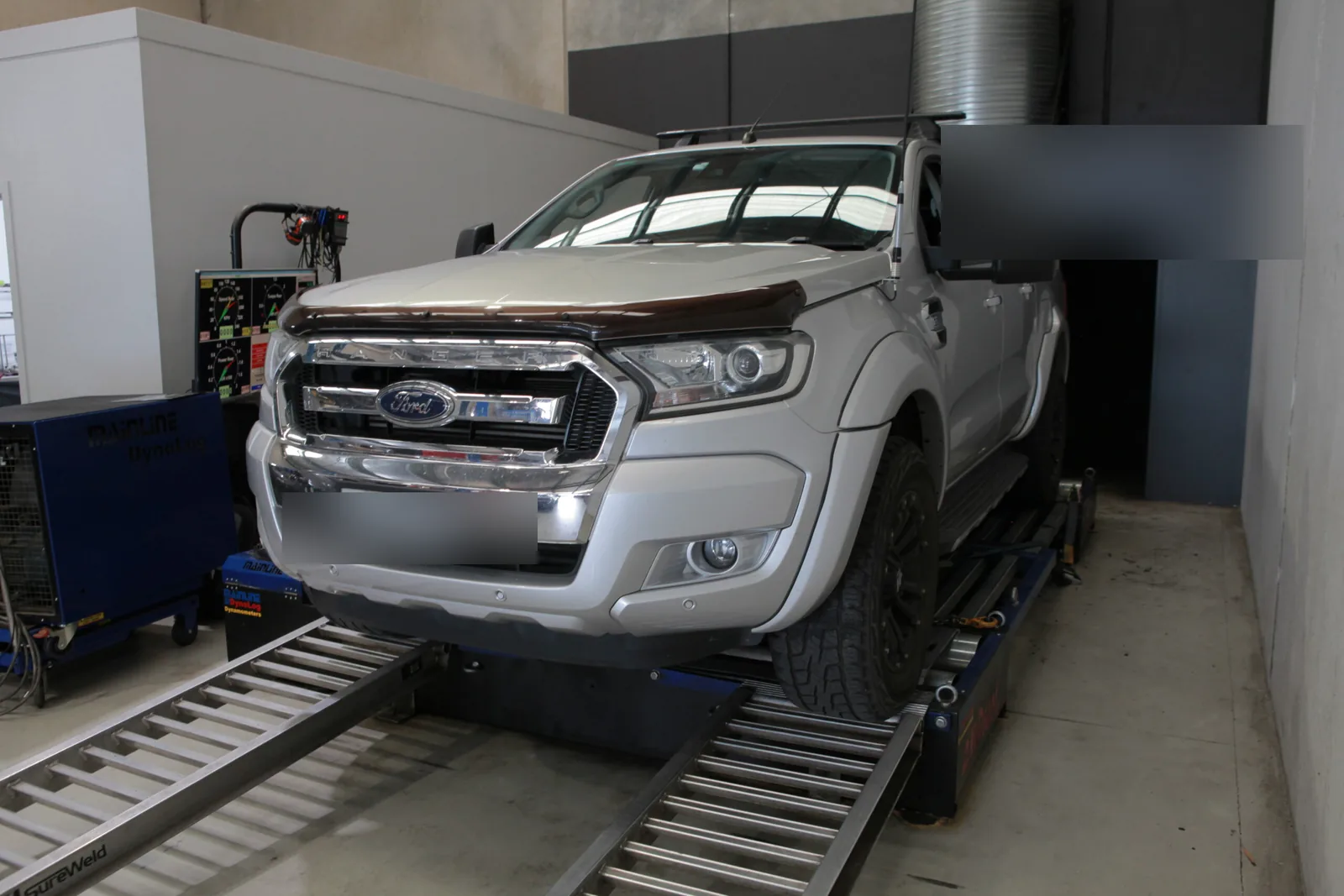
Photographs of Fords from the workshop years. They are not all Ford Ranger 3.2 (P5AT) cars — the archive spans fifteen years and does not record which engine is in which photograph.
-
Ford EcoBoost -
Ford Falcon -
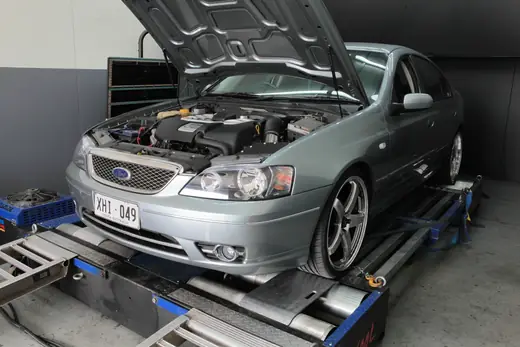
Ford Falcon BF V8 -
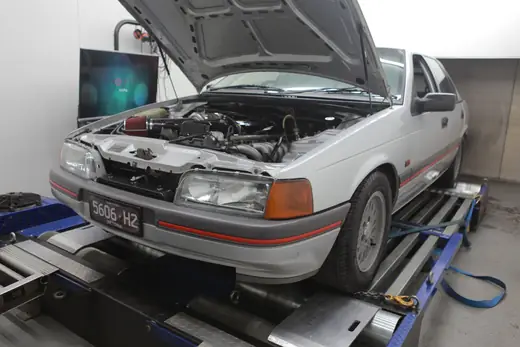
Ford Falcon EA
Photographs from the former Tuned By Anton workshop, 2015–2025. See the full gallery
