


Intake Valve Carbon Buildup
Direct injection eliminated fuel wash — and with it, the self-cleaning effect that kept port-injected valves clear for decades. Here's what builds up, what it costs you on the dyno, and why it must be addressed before calibration.
Direct-injection engines bake oil-vapour carbon onto the intake valves because no fuel washes them. Those deposits shrink effective port area, corrupt the volumetric-efficiency tables a calibration relies on, destabilise AFR at low load and shift the knock threshold — so the engine should be inspected and, if needed, walnut-blasted clean before calibration, not tuned around. Inspection is sensible from around 40,000 km, earlier on modified engines.
Why Direct Injection Engines Carbon Up
Port injection sprays fuel directly onto the back of the intake valve on every intake stroke. That continuous fuel wash keeps deposits from forming. Direct injection bypasses the valve entirely — fuel enters the cylinder under high pressure, the valve sees nothing but hot blow-by gases and oil vapour from the PCV system.
No Fuel Wash
In a DI engine the injector fires directly into the combustion chamber. The intake valve never contacts liquid fuel, so there is nothing to dissolve or carry away the oil film that accumulates from PCV blow-by gases on every intake cycle.
Baked-On Oil Vapour
Hot combustion gases revert past the valve seat during overlap. Combined with continuous PCV vapour on the port side, a thin oil film bakes onto the valve stem, neck and face over thousands of cycles — building into hard carbon deposits.
Progressive Accumulation
Deposits grow slowly — typically negligible to 20,000 km, noticeable by 40,000–60,000 km, and severe beyond 80,000 km on engines without port injection supplementation. Modified engines running aggressive cams or higher boost accumulate faster due to increased reversion.
Valve Condition — What You're Looking At
The three images below show the range of intake valve condition from new to heavily fouled. The difference in available port area is the difference between a calibration that works and one that never will.
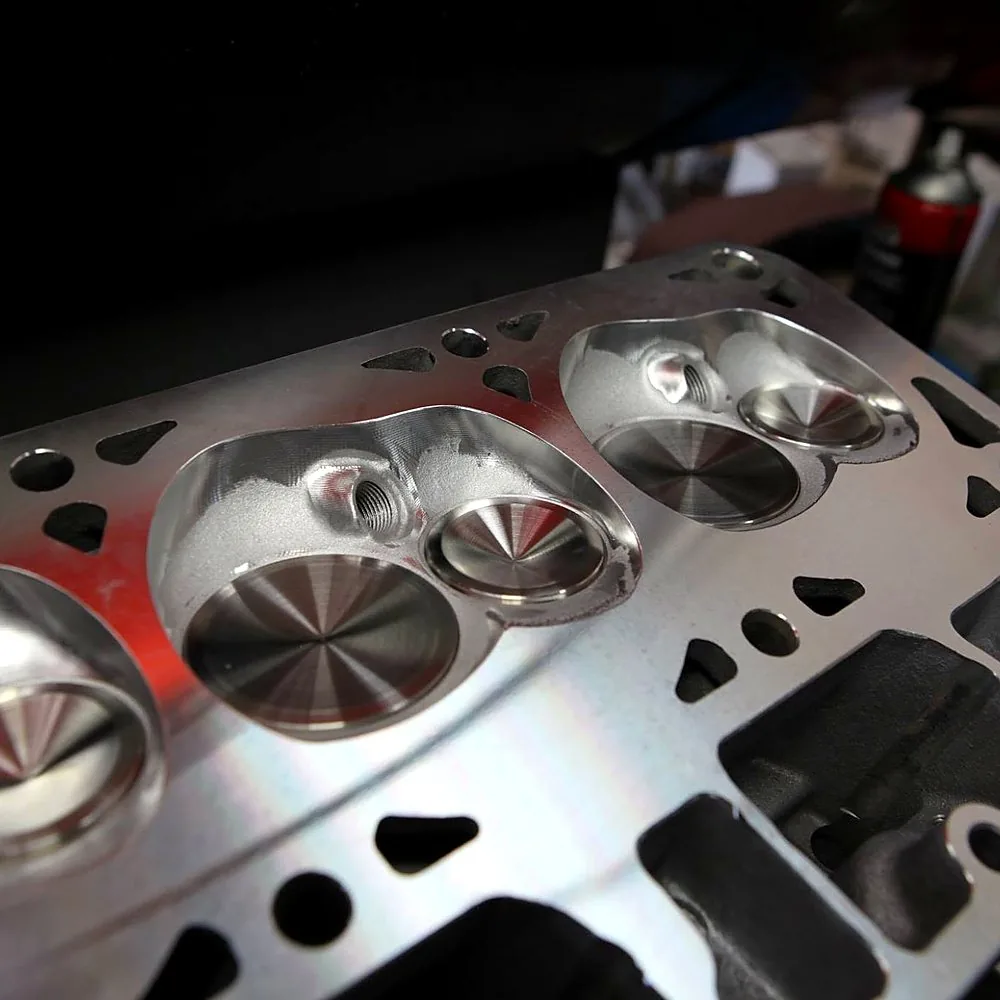
New Condition
Bare machined port and valve face. Full designed cross-section available. Airflow coefficient matches the engineer's VE table — calibration data correlates cleanly.
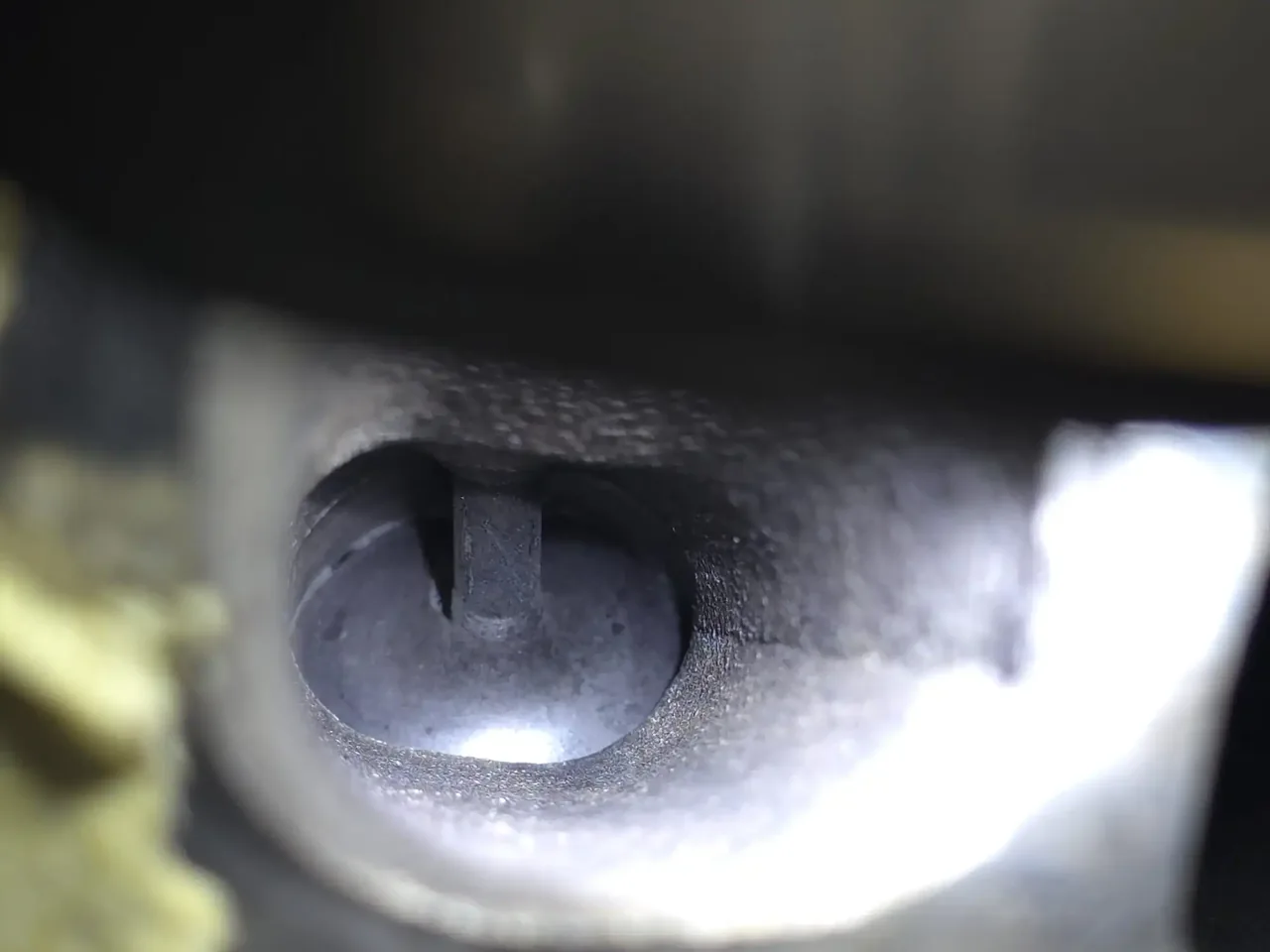
Maintained and Acceptable
Light, even deposits consistent with normal mileage and good maintenance — quality oil, a healthy PCV system, and periodic induction cleaning. Port cross-section is essentially intact and airflow stays predictable, so the engine fills cleanly enough that calibration data still correlates. This is the realistic target condition for a daily-driven direct-injection engine.
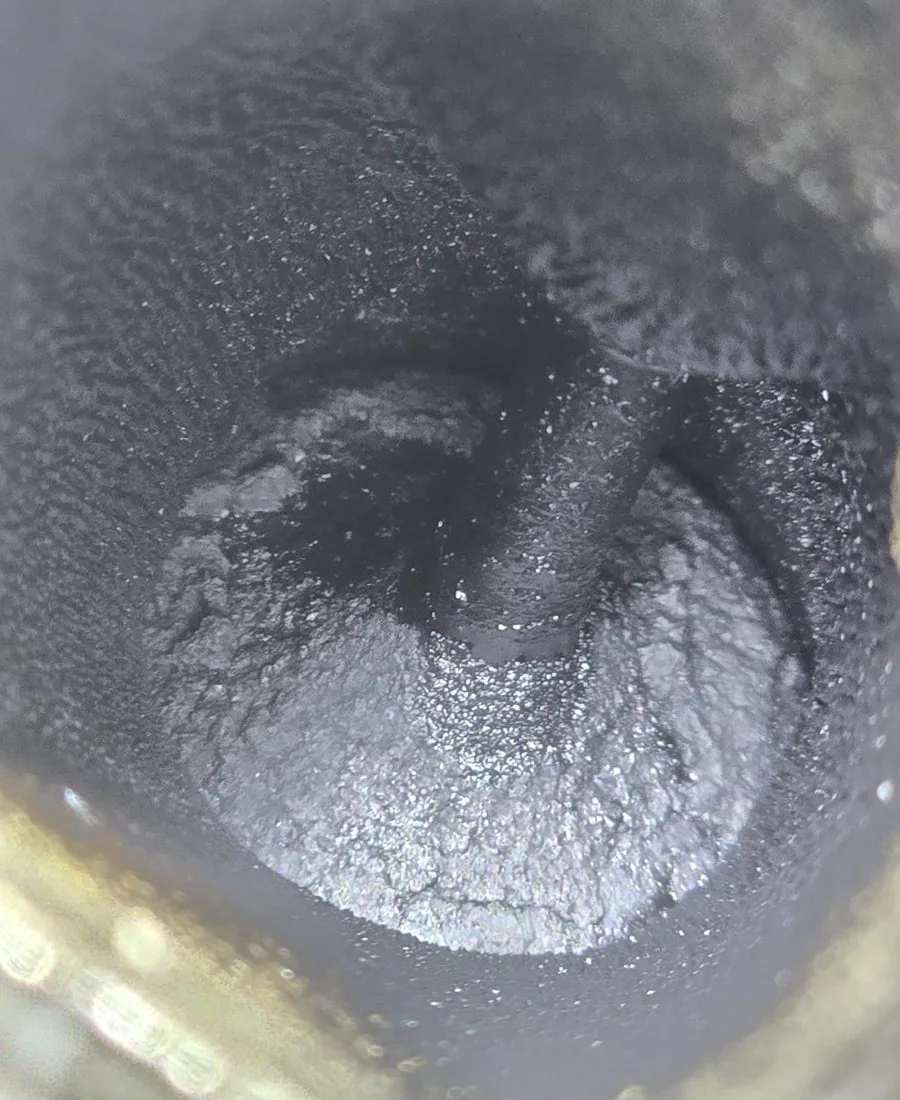
Severe Deposits
The valve face is barely visible under accumulated carbon. Effective port diameter is significantly reduced. Mixture motion is disrupted. At this stage the engine cannot be accurately calibrated — the VE surface is meaningless.
Effect on Calibration Accuracy
The calibrator's job is to build a volumetric efficiency model for the engine across every cell in the load/RPM map. Carbon deposits invalidate that model at the source — before the air even reaches the combustion chamber.
VE Table Corruption
The VE table describes how efficiently the engine fills each cylinder relative to displacement. Heavy carbon reduces effective port area unevenly across cylinders — the calibrated VE map ends up wrong for some cylinders and right for none. Load model inaccuracy compounds across every table that uses VE as a reference.
AFR Instability at Light Load
At low valve lift (idle, light cruise, light tip-in) the throttle restriction and valve area restriction stack up. Turbulence created by deposits around the valve stem causes inconsistent mixture motion, making closed-loop lambda control hunt. Fuel trims run high and the idle tune never fully settles.
Knock Threshold Shifts
Carbon deposits on the combustion chamber side of the intake valve (and on the piston crown) glow-ignite under high cylinder pressures. This introduces pre-ignition independently of spark timing — knock retard fires even on conservative timing, and the calibrator cannot compensate without running dangerously lean or retarded.
Cylinder-to-Cylinder Variation
Deposit accumulation is never uniform. Cylinders closest to the PCV inlet and those running hotter tend to carbon faster. On a per-cylinder knock system this means individual cylinders pull timing independently — the calibrated global timing map becomes a compromise serving none of them well.
Airflow Restriction and Cylinder Filling
What the restriction actually does
A valve is a variable-area restriction. At low lift, the annular gap between the valve face and the seat is the primary airflow limit — not the port cross-section. Carbon deposits on the valve face and seat area directly reduce this annular area at every lift point.
The result is a shift in the entire lift-area curve: the engine reaches its effective flow limit at a lower valve lift than the cam profile intends. On an already-aggressive cam profile this can mean the engine never reaches its target VE at any RPM.
Beyond the valve itself, deposits disrupting the port floor alter the velocity stack effect that a well-designed inlet relies on at high RPM. Port velocity drops, inertia charging at high RPM is reduced, and peak power falls even though the rest of the drivetrain has not changed.
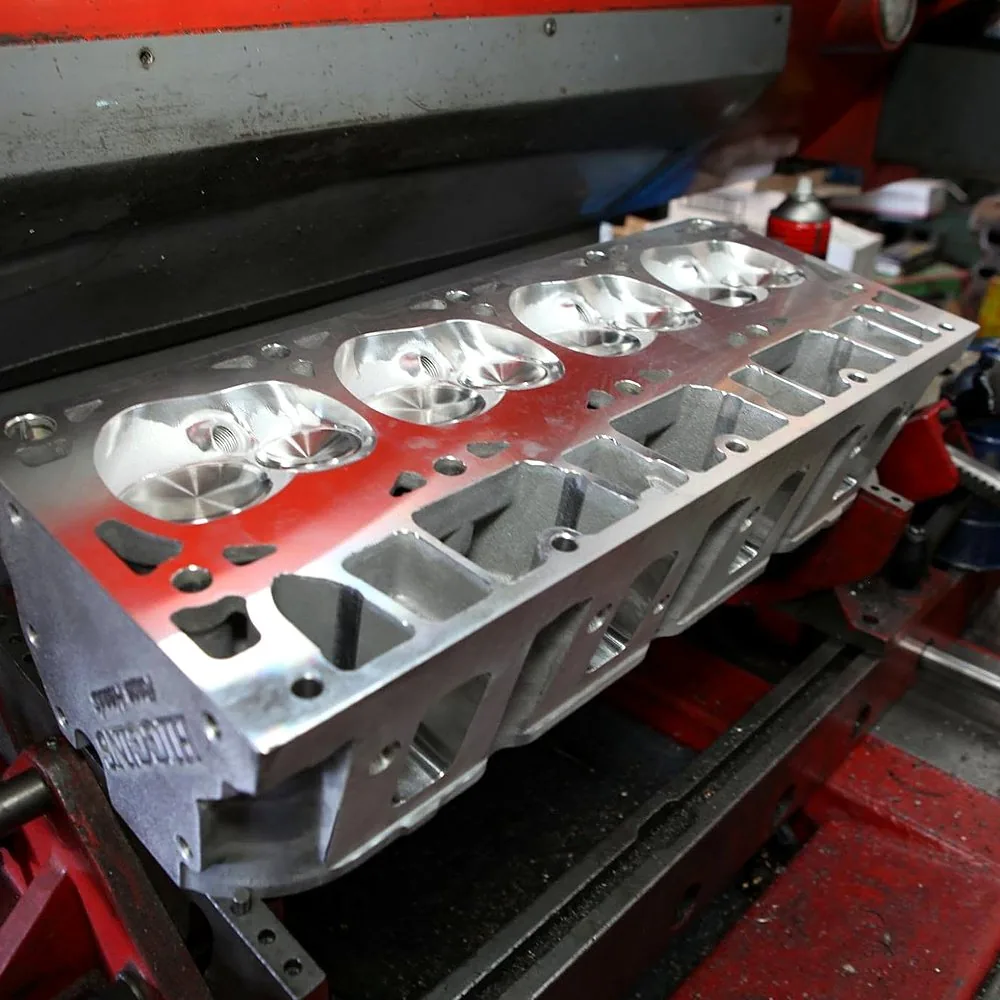
Detection and Diagnosis
Carbon buildup rarely triggers a fault code until it is severe. The signs are found in logged data and fuel trim analysis long before the customer notices driveability issues.
Positive Fuel Trims
Long-term fuel trims (LTFT) persistently positive at idle and light cruise — the ECU is adding fuel to compensate for reduced airflow the MAF isn't detecting. If LTFT is +8% or more at light load on a recently serviced engine, suspect valve carbon before adjusting calibration.
Elevated Knock Activity
Datalog knock retard at low load and moderate RPM — not at the top-end where you'd expect it. Isolated knock events on one or two cylinders that don't correlate with heat or fuel quality point to deposit-induced pre-ignition rather than a calibration problem.
Borescope Inspection
Remove a spark plug and use a borescope through the plug hole. With the piston at BDC you can view the intake valve head directly. Even a 2-minute borescope check will confirm or rule out heavy deposits before you invest time in a full calibration session.
Pre-calibration diagnostic checklist for DI engines:
- Engine service history confirmed — recent oil change, correct specification oil
- LTFT at idle within ±5% (cold and warm)
- No isolated cylinder knock events at light load in base calibration
- Borescope or port inspection performed if mileage >50,000 km
- Catch can inspected — excessive blow-by volume increases deposit rate
- Mileage 30,000–60,000 km — note condition, monitor trims during calibration
- Mileage >60,000 km on unmodified DI engine — inspect before booking calibration
- Stage 2+ engine with aggressive overlap and no port injection — service interval is shorter
Remediation Options
The correct remediation depends on deposit severity and the engine's intended use. Not all cleaning methods are equal — some remove surface deposits while leaving the hardened base layer that causes pre-ignition.
Walnut Blasting
The industry standard for DI intake valve cleaning. Crushed walnut media is blasted through the intake port with the valve closed. Removes all but the most hardened deposits without damaging the valve seat or port surfaces. Requires removal of the intake manifold — budget 4–6 hours on most engines. Results are immediate and measurable.
✓ Recommended before any stage calibration
Chemical Flush
Carbon-dissolving chemicals injected into the intake while the engine idles. Effective on light deposits and as a maintenance treatment between walnut blasts. Does not remove hardened multi-layer deposits and can loosen large chunks that sit on the piston crown — requires careful execution on a heavily fouled engine.
⚠ Maintenance-grade only
Port Injection Supplementation
Adding a secondary port injection system (e.g. Bosch HDEV) to a DI engine restores the fuel wash effect, preventing deposit formation rather than treating it. Common on heavily modified Stage 2+ builds. Requires integration with the main calibration — fuel delivery split between port and direct injection must be mapped accurately.
✓ Permanent fix for modified builds
Modified Engines — Compounding Effects
Stage 2 and above builds amplify every effect described above. Higher cylinder pressures, more aggressive cam profiles, and increased crankcase blow-by create conditions where carbon buildup is faster, harder to remove, and more damaging to calibration accuracy.
Aggressive Cam Profiles Increase Reversion
Long-duration, high-overlap camshafts create exhaust reversion into the intake port during the overlap period. This pushes hot combustion gases back past the intake valve — directly accelerating deposit baking on the back of the valve. The same cam profile that makes power also shortens the cleaning interval.
Higher Boost Increases Blow-By
Elevated cylinder pressure from forced induction forces more combustion gases past piston rings into the crankcase. PCV flow rate increases proportionally. Without an appropriate catch can system, more oil vapour per cycle reaches the intake valve — deposit rate increases roughly in proportion to boost level.
Pre-Ignition Risk at High Power
On a high-compression, high-boost engine a glowing carbon deposit is not just a calibration problem — it is an engine failure risk. Pre-ignition under high load can cause connecting rod and piston failure in a single cycle. This is not recoverable by adding timing retard. The deposit must be removed.
Calibration Work Degrades Faster
A tune built on a clean engine and run on an engine accumulating carbon at an accelerated rate will drift noticeably within 15,000–20,000 km. The customer experiences power loss and AFR drift that are not related to any change in hardware or calibration — valve condition is the variable. Set a service interval expectation at delivery.
Summary
Check Before You Tune
Inspect valve condition on any DI engine over 40,000 km before a calibration session. LTFT and borescope take 30 minutes and will save you a redone calibration and an unhappy customer.
Clean Means Accurate
A calibration built on a clean induction system is a calibration that holds. VE tables, load models, and fuelling maps are only as accurate as the airflow they were built on. Start clean.
Set Customer Expectations
Communicate the service interval to every DI engine customer at delivery. A documented maintenance schedule protects the workshop's reputation when the car returns with apparent calibration drift that is actually a maintenance issue.
Ready to talk about your build?
If you're running a DI engine and want to discuss induction service before a calibration booking, get in touch. We'd rather have the conversation early than diagnose it on the dyno.
Direct injection, and what it leaves behind
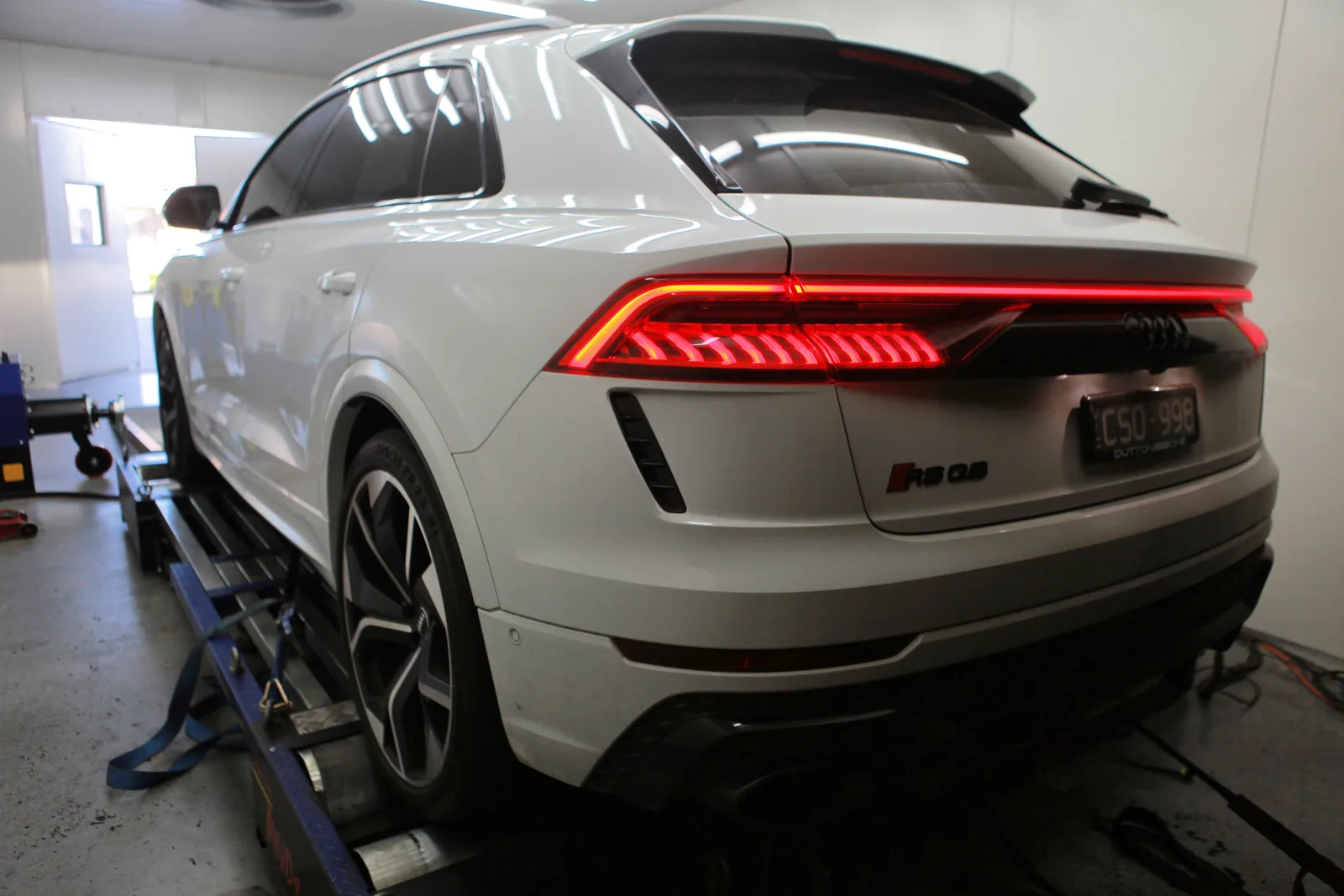
Intake valve deposits are a direct-injection problem, so they are a problem for these platforms.
-

Volkswagen Golf Mk7 -

Audi S3 -

BMW M140i -

Mercedes-Benz CLA 45
Photographs from the former Tuned By Anton workshop, 2015–2025. See the full gallery
