
Fuel Selection for Performance Builds
The calibration can only be as good as the fuel you are running. Understand the limitations of each fuel type before committing to a build strategy — and understand that a calibration built on ideal fuel conditions can fail dangerously on substandard fuel on the day.
Octane is knock resistance, not power in itself: a higher rating lets the calibrator run more ignition advance and cylinder pressure safely, and that is where the power comes from — the fuel is the ceiling. Pick the fuel before the build, because an E85 calibration runs much richer fuelling and different timing and is dangerously lean on pump petrol. For calibrations developed to E85's limits, consistent drum fuel beats variable pump E85.
Octane Is About Knock Resistance, Not Power
Octane rating defines a fuel's resistance to autoignition under pressure — what the industry calls knock resistance. A higher octane number does not by itself produce more power. What it does is allow the calibrator to use more ignition advance and run higher cylinder pressures safely, which is where the power comes from. The fuel is the ceiling. The calibration works within it.
Higher Octane Allows
- More ignition advance at load without detonation
- Higher boost pressure targets
- Better thermal stability under sustained load
- Larger margin between the calibration and the knock threshold
Lower Octane Requires
- Conservative ignition timing retard to avoid knock
- Reduced boost targets
- Wider closed-loop knock correction windows
- More conservative calibration overall — less power, not safer power
What Knock Does
- Pressure spikes that exceed safe piston and ring land loads
- Localised heat concentration on piston crown and head surface
- Progressive damage that accelerates with each event
- Catastrophic failure when sustained — not a close call, a failure
Drum-Supplied Fuel for Serious Applications
For any competition or high-performance build where the calibration is developed to a fine margin, drum-supplied race fuel is the only reliable way to guarantee fuel consistency between sessions. Bowser fuel — even premium pump fuel — varies in octane, ethanol content, and contamination between batches, stations, and seasons.
E85 in Melbourne — quality concerns
Over a sustained period, pump E85 at a number of Melbourne service stations has shown inconsistent octane quality. There is no officially published document on this, but the experience is well-established among local tuners — fuel that reads nominally as E85 has been delivering lower knock resistance than expected. Local stations have also had supply contamination issues affecting octane stability. If you are tuning to E85 limits, you need a consistent source, not bowser E85 from whichever station is convenient.
E85 station availability in Australia is declining
Flex-fuel vehicle manufacturers who drove the demand for bowser E85 have reached the point where their contractual supply obligations to service stations have been fulfilled. The result is a gradual withdrawal of E85 from service station forecourts. If your build strategy depends on accessible pump E85, this is a risk worth factoring into the planning.
Why drum fuel makes calibration development better
- Known octane rating from a verified batch — no session-to-session variance
- Consistent ethanol content when running ethanol blends — critical for accurate fuel model calibration
- No contamination from a shared bowser that has dispensed other fuel types
- Can use the same drum fuel at track, dyno, and road testing — identical calibration conditions throughout
- Batch documentation available from the supplier for record keeping
Yes, it is an inconvenience. Yes, it costs more than pump fuel. But a calibration developed on one fuel and then run on a different fuel with lower knock resistance does not hold its safety margins. It is a risk that costs less to manage than to repair.
Fuel Types — Characteristics and Limitations
Every fuel has a ceiling and a floor. Know both before you build around one. The table below is a practical reference — not an exhaustive chemistry breakdown. Consult your fuel supplier for batch-specific data.
| Fuel | RON Approx. | Best Suited For | Limitations | Consistency |
|---|---|---|---|---|
| Pump 95 RON | 95 | Lightly modified street vehicles, mild stage 1 builds | Low ceiling for boost and timing. Batch variation at bowser. Not suitable for performance development. | Variable |
| Pump 98 RON | 98 | Stage 1–2 street builds, mild diesel tunes, normally-aspirated performance | Still batch-variable. Not suitable for high-boost or race applications. Quality differs between brands and regions. | Variable |
| E85 (pump) | 104–107 | High-boost street and track builds, significant intercooling capacity required | Ethanol content varies 70–85%. Pump supply inconsistency in Australia. Cooler combustion adds fuelling demand (+25–35%). Corrosive to incompatible fuel systems. Melbourne supply declining. | Inconsistent |
| E85 (drum) | 105–108 | High-boost street, track, and competition builds | Same fuelling demand as pump E85. Requires appropriate fuel system. Must be stored and handled correctly — ethanol attracts moisture. Not for diesel. | Consistent |
| E98 (drum) | 108–113 | Full ethanol race builds, maximum charge cooling, high-compression applications | Highest fuelling demand of all common fuels. Fuel system must be fully ethanol-rated. Cold start below ~10°C requires supplementary starting fuel. Requires dedicated calibration — cannot flex between E85 and E98 without changes. | Consistent |
| M1 (Methanol) | 119+ | Competition drag and circuit applications. Specific high-power builds. | Roughly double the fuel flow of petrol — requires purpose-built fuel system. Difficult to restart hot. Toxic — requires appropriate handling and workshop safety provisions. Burns with an invisible flame. | Consistent |
| M5 (Methanol blend) | Variable | Some specialist applications where full methanol conversion is not practical | Blend ratio must be verified and consistent. Not widely used. Discuss application requirements before committing to this fuel path. | Depends on blend |
| C85 (race petrol blend) | ~100–103 | Circuit racing, track days, high-performance street builds requiring a consistent quality premium fuel | Higher cost than pump fuel. Leaded versions have circuit restrictions. Energy density varies by blend. Not suitable as a daily street fuel in some formulations. | Consistent |
| C16 (race fuel) | ~116–120 | Top-level circuit and drag racing, maximum ignition advance and boost, competition-only applications | Leaded — illegal for road use. Requires catalyst removal. Very high cost. Overkill for most builds. Dedicated calibration required — do not run C16 in an engine calibrated on 98 RON. | Consistent |
Your Fuel Choice Shapes the Entire Calibration
We calibrate to the fuel you specify. When you switch fuel types without notifying us, the calibration is no longer appropriate for your fuel. This is not a minor concern — it is the difference between a safe tune and an unsafe one. Lock in your fuel strategy before calibration development begins and stick to it.
Switching Fuel Mid-Development
Running a session on E85 then filling with pump 98 for the next session and expecting the same result is a common mistake. The fuelling, timing, and boost targets are built around a specific fuel's properties. Even switching between batches of the same labelled fuel can produce knock where it was not present before if octane or ethanol content has changed. Always inform us of any fuel change.
Temperature and Storage Effects
Ethanol-blended fuels absorb moisture from the atmosphere over time, which dilutes the ethanol content and reduces octane. A drum that has been open or partially used for months in a warm workshop will not behave the same as a fresh drum. Store fuel sealed, in a cool environment, and note the fill date. Race fuel is not wine — it does not improve with age.
Every fuel has a limit. The calibration must be built on the worst-case fuel you will actually run.
If there is any chance you will run pump E85 alongside drum E85, the calibration must account for the lower-quality pump fuel's octane ceiling. We do not calibrate for the best fuel you might use — we calibrate for the worst fuel you will run. If you can guarantee drum fuel every time, you get the full benefit of that consistency. If you cannot, we build in the margin to survive a substandard batch.
Match the Fuel to the Application
There is no single best fuel. There is only the right fuel for your specific application, fuel system, build budget, and operational context. Here is a practical guide.
Street Performance — Daily Driven
Pump 98 RON if the build is mild and the goals are practical. For higher-boost builds, E85 from a reliable drum supplier gives you the charge cooling and knock resistance to make the most of the hardware without exotic fuel system requirements. Confirm E85 is available consistently in your area before building around it.
Diesel Tow & Work Vehicles
Pump diesel is appropriate for most commercial tow and work applications. Biofuel blends can reduce injector life if the calibration or hardware is not suited to them — clarify what blend is in use when submitting. High-power diesel competition builds may warrant a purpose-sourced diesel but this is a niche application.
Circuit Racing
C85 or a quality drum E85/E98 depending on your fuel system and regulations. C85 is well-suited if you need a consistent quality petrol-based fuel without the fuelling demands of ethanol. E85/E98 suits high-boost builds where charge cooling matters. Check circuit regulations — leaded fuels are prohibited at many venues.
Drag Racing & Maximum Power
E98, methanol, or C16 depending on the class regulations, power level, and fuel system capability. Methanol offers the highest knock resistance and charge cooling of common race fuels but demands a purpose-built fuel delivery system and specific handling procedures at the workshop. Do not experiment with methanol without properly understanding the storage, safety, and calibration requirements.
Lock in your fuel strategy before calibration begins
When you submit a file through the portal, tell us exactly what fuel you are running — type, source, and ethanol content if applicable. It shapes everything from the fuelling model to the ignition timing limits.
E85, 98 and everything in between
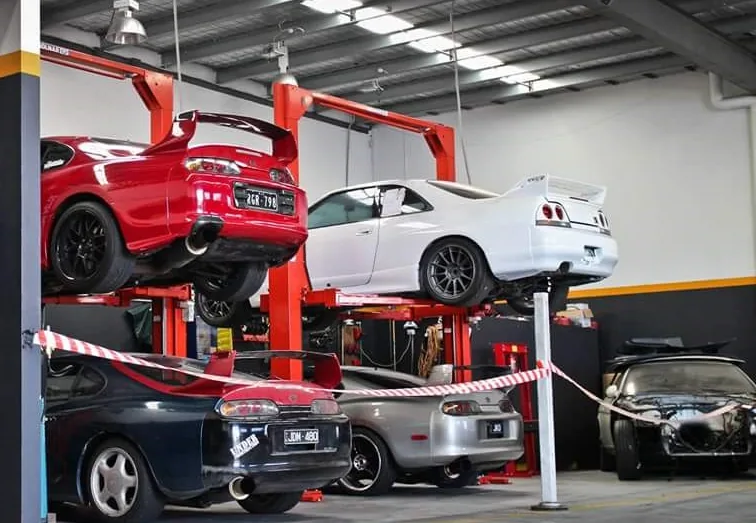
Fuel choice is a calibration decision, and it is made on cars like these.
-
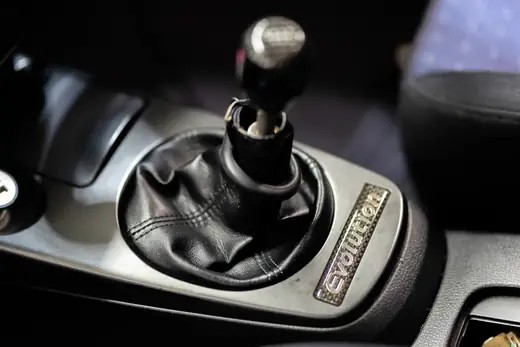
Mitsubishi Evo 8 -
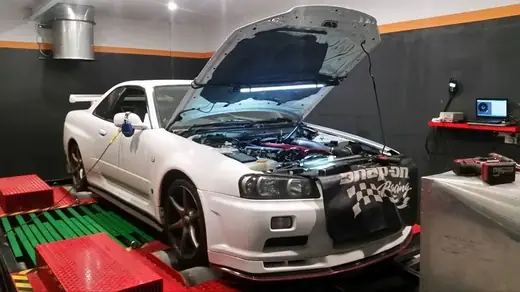
Nissan Skyline R32 GT-R -
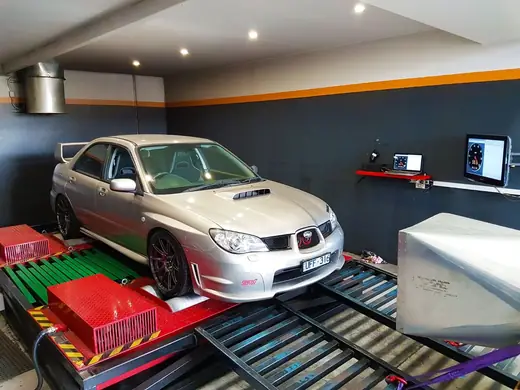
Subaru WRX STI -
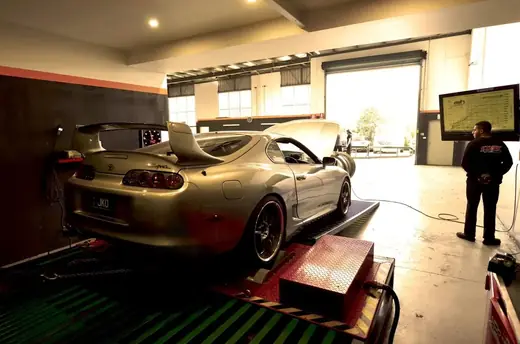
Toyota Supra
Photographs from the former Tuned By Anton workshop, 2015–2025. See the full gallery
