

Calibration Glossary
Plain, accurate definitions of the ECU and TCU calibration terms that come up in tuning — torque modelling, boost control, knock, AFR, EGT and the rest. The reference behind the problem library and the engine pages.
Calibration is the engineering of the values inside an ECU or TCU — the fuelling, ignition, boost, torque-model and transmission tables — so an engine or gearbox meets a target safely on a specific build and fuel. This glossary defines the terms that work involves, in plain language, for workshops and anyone researching how modern engine management is calibrated.
ECU (Engine Control Unit)
The engine's control computer. It reads sensors (airflow, crank position, knock, lambda, temperatures) and commands fuelling, ignition timing and boost from calibration tables (“maps”) to run the engine.
Calibration is the work of editing those tables for a given build, fuel and goal — the ECU's logic is fixed; the maps inside it are what a tuner changes.
TCU (Transmission Control Unit)
The control computer for an automatic or dual-clutch transmission. It sets shift points, line pressure, clutch/lock-up behaviour and torque limits.
On a high-output build the TCU has to be calibrated alongside the engine, or the transmission gives the extra power back in slip and heat.
Calibration
Developing and verifying the values in an ECU/TCU's tables so the engine or transmission meets a target safely on a specific build and fuel — as opposed to flashing a generic preset.
“Tuning” is the popular word; calibration is the engineering discipline behind it: structured changes, validated against measured data.
Flash / reflash (ECU remap)
Writing a modified calibration to the ECU's memory over the diagnostic port or bench. A “remap” is the modified calibration that gets flashed.
The read (extracting the stock calibration) is the starting point every custom calibration is developed from.
Standalone ECU
An aftermarket engine controller that replaces the factory ECU entirely, giving full control of every table — used where the OEM ECU can't be flashed or the build needs more than it allows.
Calibrated from a base map rather than a factory file; the trade-off is total control for more setup work versus an OEM-flash platform.
Torque modelling (torque-structured ECU)
Modern ECUs are organised around requested torque: the ECU works out how much torque is being asked for, then commands the airflow, fuel and spark to deliver it — and intervenes if a limit is exceeded.
It means raising power often requires raising the torque model's ceilings, not just adding boost or fuel, or the ECU pulls the extra output straight back.
Driver demand
The map that converts accelerator-pedal position into a torque (or throttle) request. It shapes how the throttle responds to the pedal.
Re-shaping driver demand is what makes a drive-by-wire car feel sharper without changing actual power — and a too-aggressive curve makes a car tiring to drive.
Torque intervention / torque limiting
When requested or modelled torque exceeds an ECU ceiling, the ECU intervenes — closing the throttle, pulling timing or cutting fuel — to bring torque back under the limit.
A common cause of a build that “flattens out” under load; the fix is calibrating the relevant torque limits to match the build, verified against logged data.
Boost control
The calibration that manages turbo boost pressure via the wastegate (or VGT vanes), combining an open-loop duty term that aims near target with a closed-loop trim that corrects to it.
Good boost control lands on target and holds; poor control spikes, hunts or tapers.
Closed-loop vs open-loop
Open-loop runs a fixed commanded value; closed-loop measures the result and corrects toward a target. Boost and fuelling both use a base open-loop term tightened by a closed-loop trim.
Calibration usually means getting the open-loop term close first, then letting the closed-loop trim do small corrections — not relying on the trim to fix a bad base.
Boost-by-gear
Targeting different boost levels per gear — typically less in low gears to protect traction and driveline, more in higher gears where the car can use it.
A torque- and traction-management tool as much as a power one.
VGT (variable-geometry turbo)
A turbo with movable vanes that change the effective housing size, common on diesels. The ECU varies vane position to control boost and spool across the rev range.
Calibrating VGT control is central to diesel response and to keeping exhaust temperatures and boost in a safe window under load.
Air-fuel ratio (AFR) & lambda
The ratio of air to fuel in the charge. Lambda expresses it relative to the chemically complete (stoichiometric) ratio: lambda 1.0 is stoich, below 1.0 is rich, above is lean.
Target AFR is set richer than stoich under load to control combustion temperature and knock; it is a primary safety and power lever in any calibration.
Stoichiometric (stoich)
The air-fuel ratio at which fuel and oxygen are chemically balanced — about 14.7:1 for pump petrol, near 9.8:1 for E85. It is the reference point lambda is measured against.
Cruise is run at stoich for efficiency and catalyst function; load is run richer.
Flex fuel / E85 / ethanol content
Ethanol blends (E85 is roughly 85% ethanol) need much more fuel volume and tolerate more timing than petrol. Flex-fuel calibration adapts fuelling and spark to the measured ethanol content.
An E85 calibration is dangerously lean if run on petrol — picking the fuel before the build matters, and flex tuning handles the variation safely.
Direct injection (DI) & the HPFP
DI sprays fuel straight into the cylinder at high pressure via a high-pressure fuel pump (HPFP). The HPFP's flow ceiling is a common limit on high-output DI engines.
Calibration has to respect the pump's real headroom; where the build runs supplementary port or water-methanol injection, that is brought into the fuelling strategy.
Ignition timing (spark advance)
How far before top-dead-centre the spark fires, in crank degrees. More advance can make more power up to a limit set by knock; too much causes detonation.
Optimal timing is found by advancing toward the knock-limited or best-torque point and verifying on data — never by assumption.
Knock / detonation
Uncontrolled auto-ignition of the end-gas after the spark, causing sharp pressure spikes that can quickly destroy pistons and bearings. The hard limit on ignition advance and boost.
Higher-octane fuel resists knock, letting the calibrator run more advance and pressure safely — octane is the ceiling, not power itself.
Knock control / knock retard
The ECU strategy that detects knock (via a knock sensor) and pulls ignition timing to stop it. Persistent knock retard in the logs is a warning the calibration or fuel is at its limit.
A calibration is verified by confirming knock control is not having to constantly intervene across the load range.
Datalog / datalogging
Recording ECU channels (boost, AFR/lambda, knock, timing, EGT, rail pressure, requested vs actual torque, transmission data) while the car runs, so the calibration can be verified against measured behaviour.
Datalogs are the evidence a validation-led calibration is developed and signed off against — not a dyno number alone.
Limp mode (fail-safe)
A protective fallback the ECU/TCU enters when it detects a fault or an out-of-range value — cutting power, capping boost or holding a gear to protect the driveline.
Diagnosing the trigger (often a sensor, a torque or boost deviation, or a transmission fault) is the first step; clearing the symptom without the cause just defers it.
DTC (diagnostic trouble code)
A standardised code the ECU stores when a monitored value or system fails a plausibility check — the starting point for diagnosing a fault or a limp-mode event.
Calibration changes have to keep the ECU's diagnostics coherent so they don't trip spurious codes or mask real ones.
EGT (exhaust gas temperature)
The temperature of the exhaust gas, and the key safety limit on a diesel under load. Over-fuelling raises EGT and can melt pistons and turbines — especially towing.
A diesel calibration shapes fuelling around safe EGT verified on logged data, which is why EGT logging matters on tow and 4WD builds.
DPF (diesel particulate filter)
An exhaust filter that traps diesel soot and periodically burns it off (regeneration). Its strategy has to be coordinated with the calibration.
Where a DPF strategy is altered, Protunes handles it for off-road and closed-circuit competition use only.
Validation loop (iterative calibration)
The cycle of develop → flash → log → review → refine, repeated until the logged data confirms the calibration before the file is released as final.
It is the core of a validation-led service: the file is signed off against the vehicle's own measured data, not shipped as a generic preset and hoped on.
From definitions to diagnosis: see these terms in context in the calibration problem library, the calibration methodology, and the engine pages (Ford Barra, BMW N54, LandCruiser V8 diesel).
Calibrate with the engineering behind you
Approved workshops develop and validate calibrations with us. Accounts are manually reviewed; calibrations are supplied for off-road and closed-circuit competition use.
The vocabulary, and the cars it describes
Every term on this page was written down because of a real vehicle on a real bench.
-
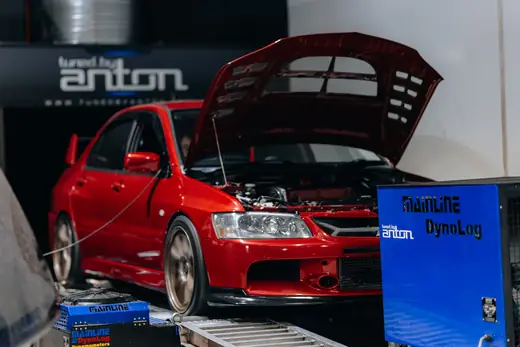
Mitsubishi Evo 7 -
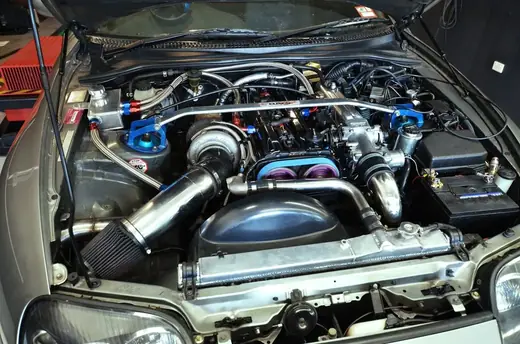
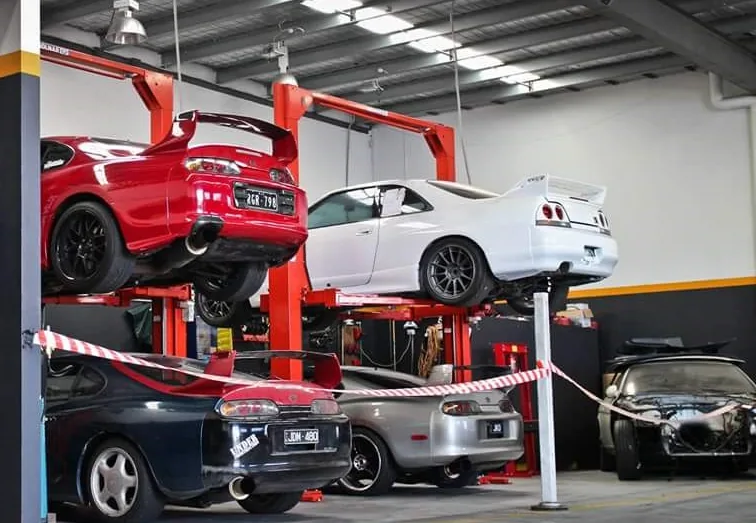
Toyota Supra -
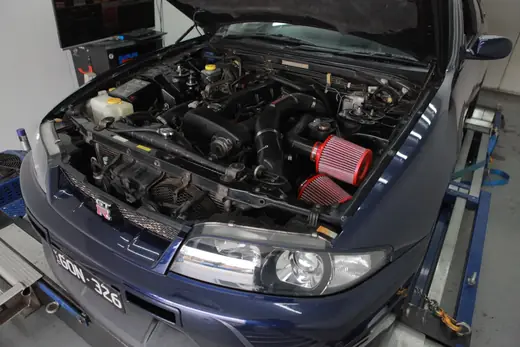
Nissan Skyline R33 GT-R -
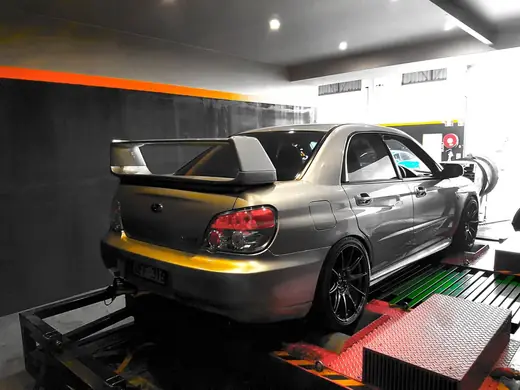
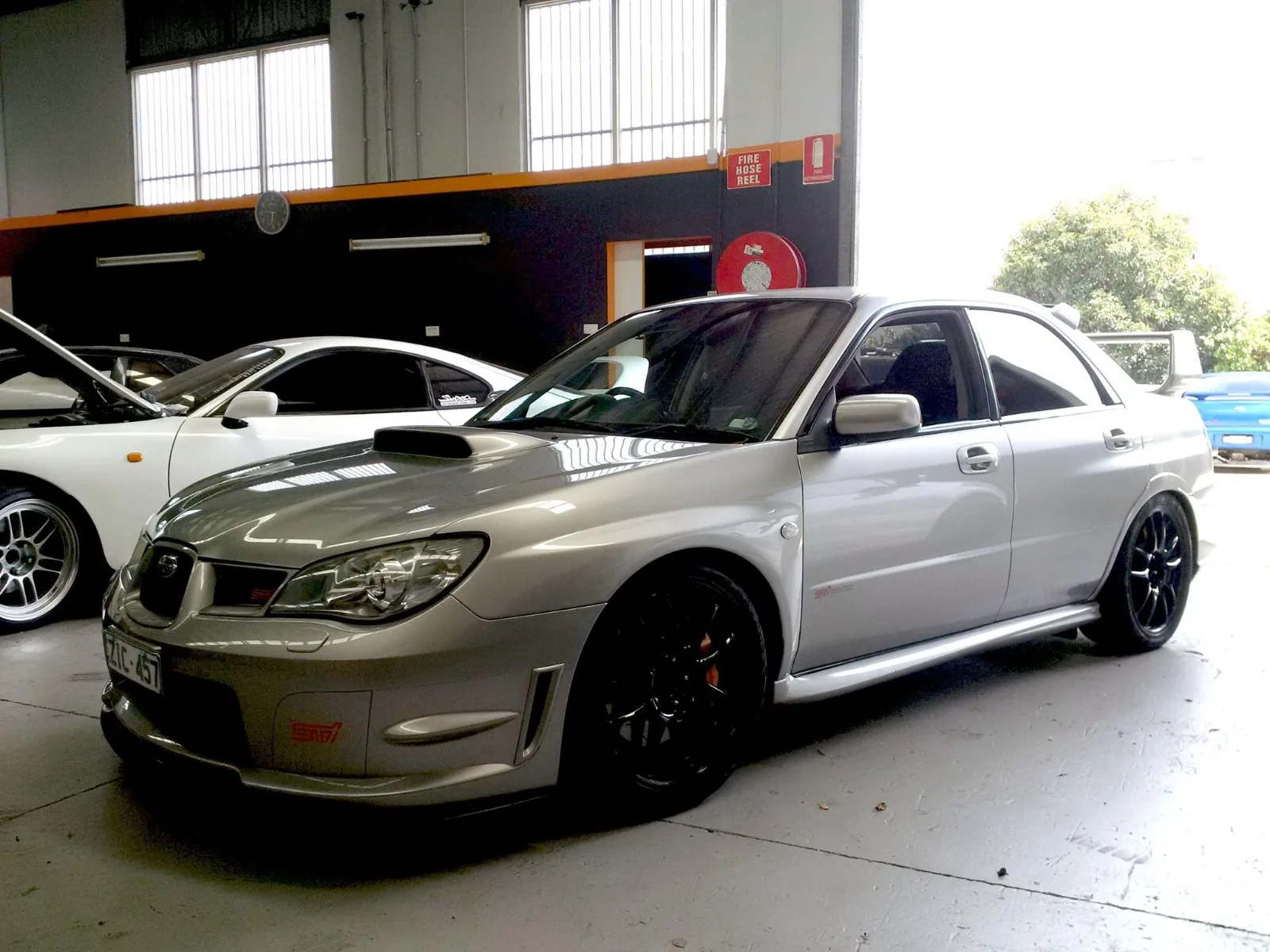
Subaru WRX STI
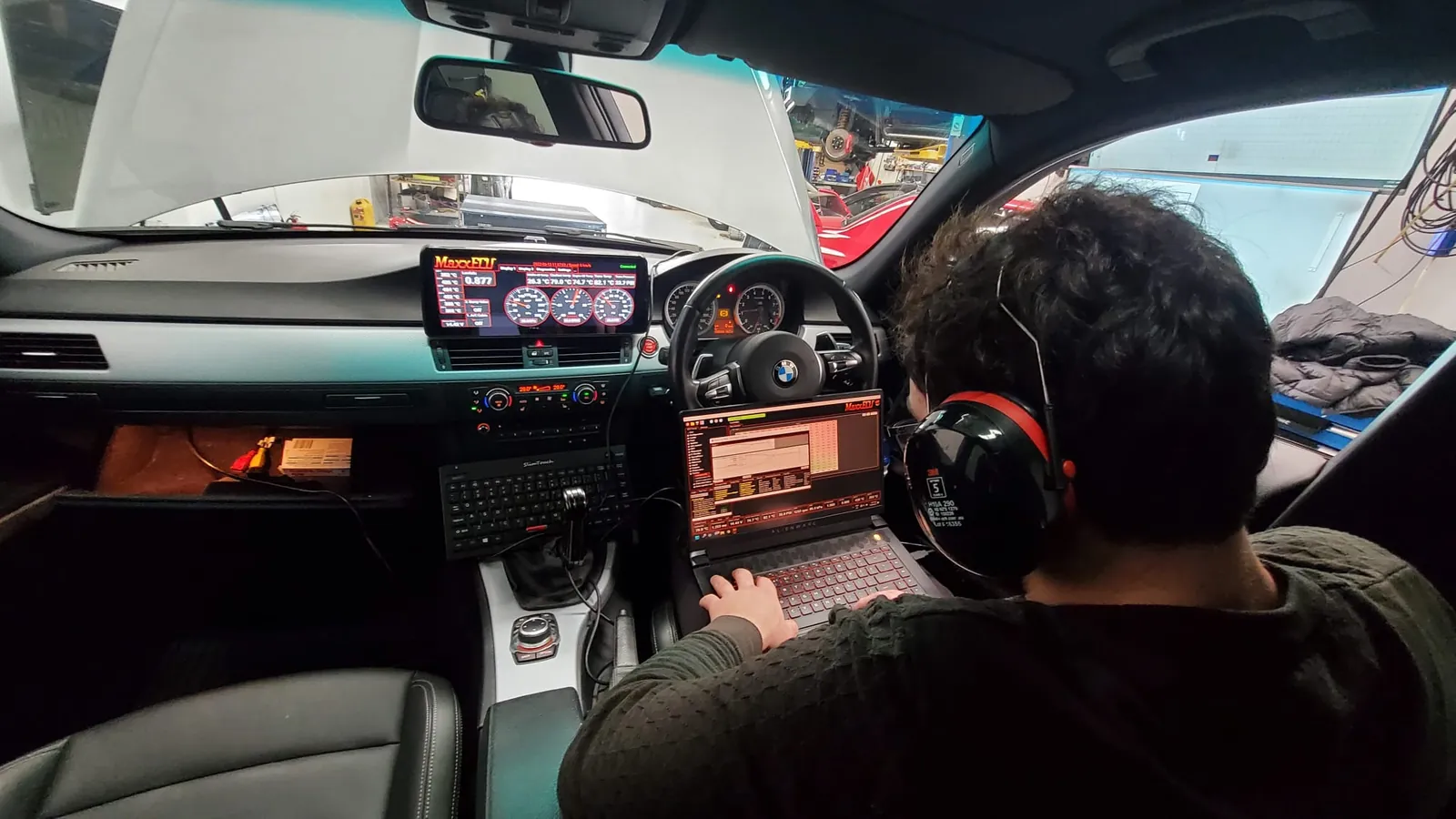
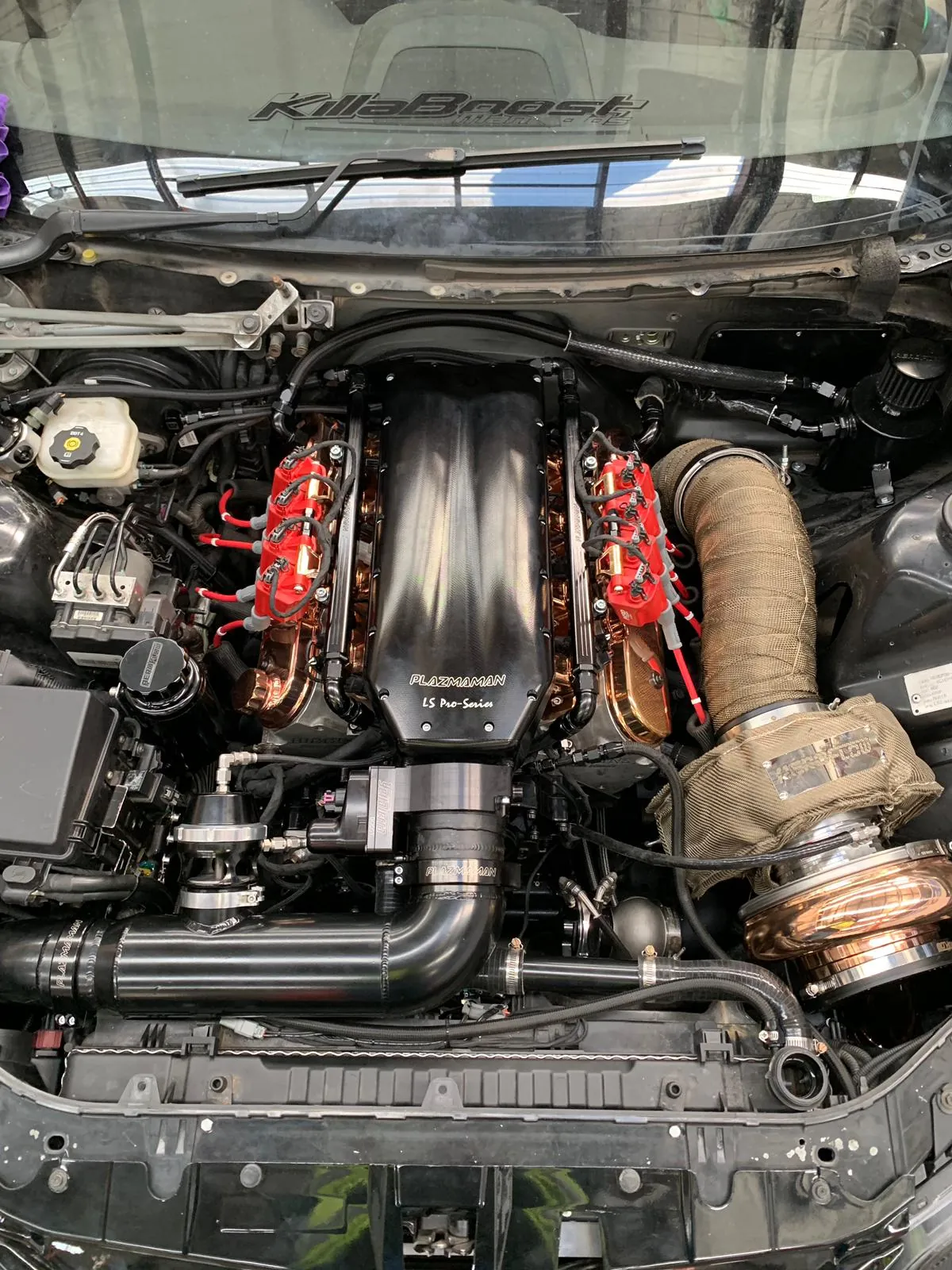
Photographs from the former Tuned By Anton workshop, 2015–2025. See the full gallery
