
Mercedes-AMG M133 Tuning & Calibration
The M133 left the factory as one of the most highly stressed production four-cylinders ever built. That is the whole calibration problem: the easy headroom was already spent before the car was delivered.
Mercedes-AMG M133 2.0L Turbocharged Inline-Four (W176 A45 / C117 CLA45 / X156 GLA45)
The Mercedes-AMG M133 (W176 A45, C117 CLA45, X156 GLA45) is calibrated with attention to boost control on an already-high factory tune, direct-injection fuelling, knock management and the 7-speed dual-clutch transmission. Every file is developed from the stock read and validated against logged boost, intake temperature, fuel pressure and knock before sign-off — on an engine with this much factory specific output, thermal margin is the real limit.
What the Mercedes-AMG M133 needs from a calibration
The M133 is a 2.0-litre turbocharged four making outputs that were, at launch, the highest specific power of any production four-cylinder. That is the defining fact for anyone calibrating it: Mercedes-AMG already used most of the obvious headroom. The engine arrives with a closed-deck block, forged pistons and sodium-filled exhaust valves precisely because the factory tune runs boost most manufacturers would not, and a calibration that treats it like an ordinary 2.0T finds the limit quickly.
Heat is the binding constraint, not fuel. Charge density falls with absolute intake temperature just as surely as it rises with absolute pressure, so on a small engine pushing this much air, an intercooler that has heat-soaked returns less charge mass for the same indicated boost — and the timing the engine accepted on the first pull is not the timing it accepts on the third. Calibration work is validated on repeat pulls with intake temperature logged, because a single cool run flatters everything.
The 7-speed dual-clutch behind it has to be calibrated with the engine rather than after it. Clutch clamping and torque limits are set conservatively from the factory, so added engine torque that the transmission has not been told about is either given back through intervention or taken out of clutch life. Treated as one system and validated on logs, the M133 makes a strong, repeatable step; treated as an engine-only job, it disappoints in both directions.
Mercedes-AMG M133 calibration work
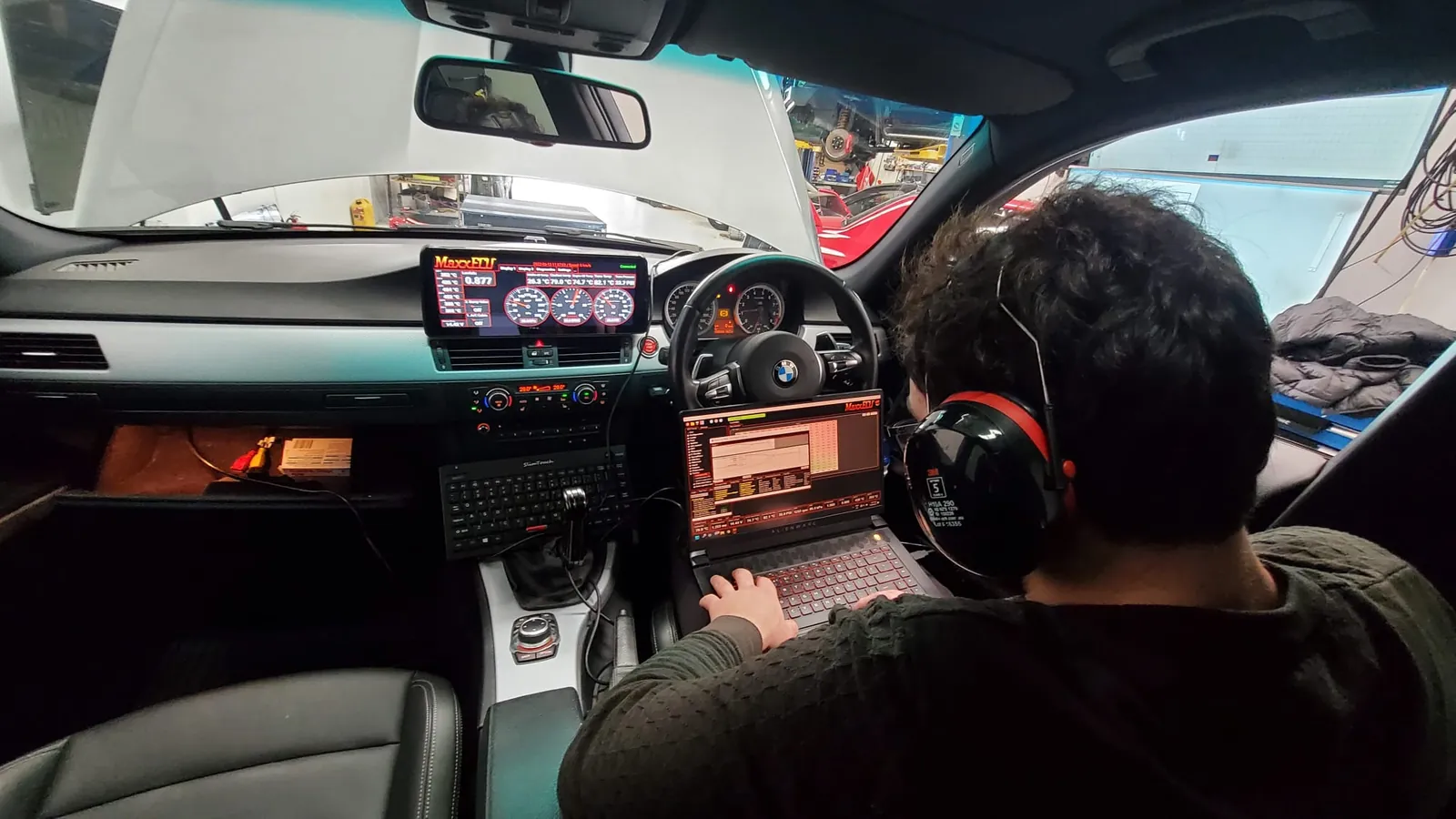
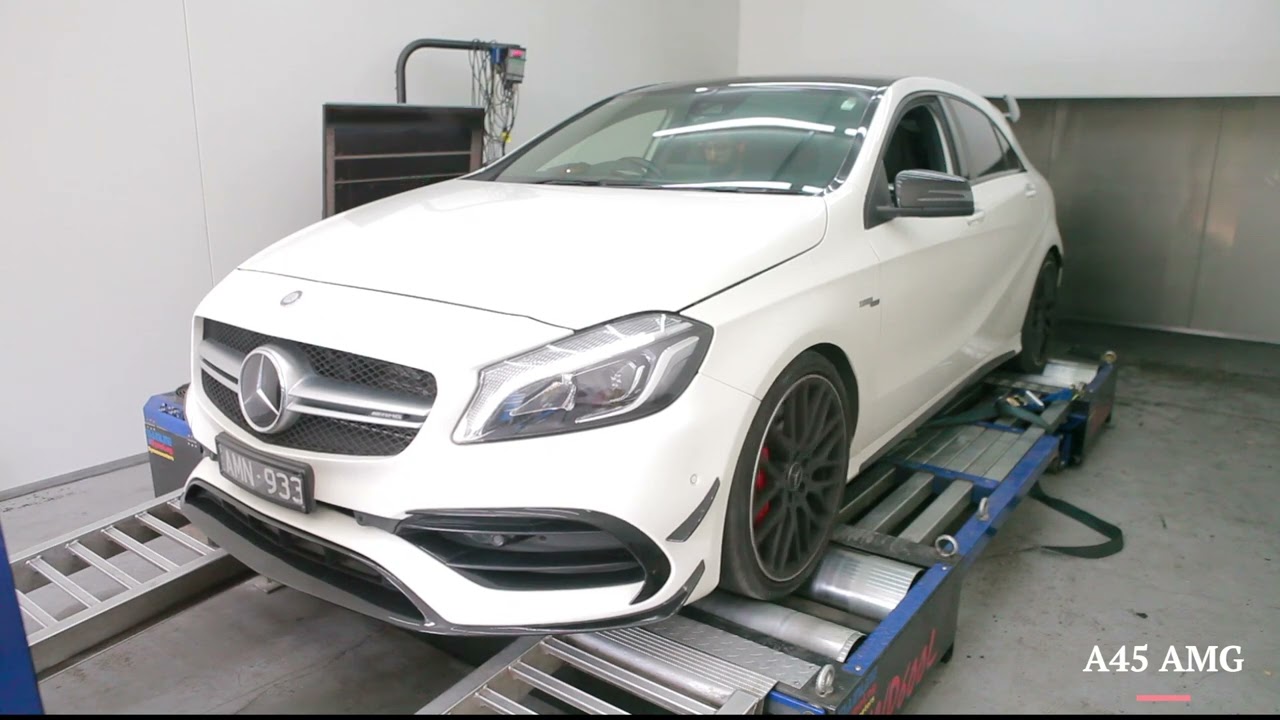
Workshop footage of Mercedes-AMG M133 calibration and development — real vehicles on the dyno, not stock library video.

Dyno results on this engine
Published results from Mercedes-AMG M133 calibrations. Each links to its full result page.
Showing 6 of 10 results on this engine. Browse them all in the dyno results archive.
What we calibrate it on
ECU tuning files
Developed from your stock read into a custom file for this car, its hardware and its fuel.
TCU tuning files
The 7-speed dual-clutch calibrated with the engine — torque limits and clamping matched to the new output.
Datalog review
Boost, intake temperature, fuel pressure and knock reviewed across repeat pulls, not one cool run.
What the work concentrates on
Heat before fuel
Charge density falls with absolute intake temperature. On an engine this highly stressed, a heat-soaked intercooler — not fuelling — sets the ceiling, so results are validated on repeat pulls.
Boost on an already-high tune
The factory runs boost most manufacturers would not. Targets are raised only where the hardware and the logged data support it, not because the table allows a larger number.
7-speed DCT calibration
Clutch clamping and torque limits calibrated with the engine, so added torque is held rather than intervened away or taken out of clutch life.
Knock, proven on logs
Timing verified against logged knock across consecutive pulls on the fuel the car actually runs — not a single cool pass.
Where the Mercedes-AMG M133 catches workshops out
The third pull is not the first pull
Small displacement and high specific output means heat accumulates fast. A calibration signed off on one cool run can be a different engine by the third; we validate on repeats with intake temperature logged.
Little easy headroom left
AMG already used most of it. Meaningful, safe gains come from resolving where the factory calibration is conservative for durability margin versus where it is at a genuine hardware limit — and only the data separates those.
The transmission gives the power back
Factory torque limits and clutch clamping are set for the factory output. Left alone, the DCT either intervenes or wears; calibrated with the engine, it holds the result.
Symptom → cause → calibration logic for the issues above:
More in the calibration problem library.
Mercedes-AMG M133 calibration — questions workshops ask
Is the M133 the same as the M139 in the newer A45 S?
No. The M133 is the 2013–2019 engine in the W176 A45, C117 CLA45 and X156 GLA45. The M139 is the later W177 A45 S engine — a different design with different calibration behaviour, despite the shared model name.
Why does the gain seem smaller than on other 2.0T engines?
Because Mercedes-AMG already used most of the headroom. The honest gain comes from where the factory calibration is conservative for durability, and from managing heat — not from asking the engine for boost it was never going to hold.
Do you tune the dual-clutch transmission as well?
Yes. Torque limits and clutch clamping are calibrated with the engine so the box holds the added torque instead of intervening or wearing. On this platform an engine-only file leaves performance on the table.
What do you need from my workshop?
The stock ECU read plus logs across consecutive pulls — boost, intake temperature, fuel pressure and knock. Repeat pulls matter here more than on most engines, because heat is the limit.
Calibrate a Mercedes-AMG M133 with us behind you
Your workshop reads the ECU and logs the car; we develop and validate the calibration from your data. See real Mercedes-Benz results in the Mercedes-Benz dyno results. Calibrations are for off-road and competition use; accounts are manually reviewed.
Mercedes-Benz through the workshop
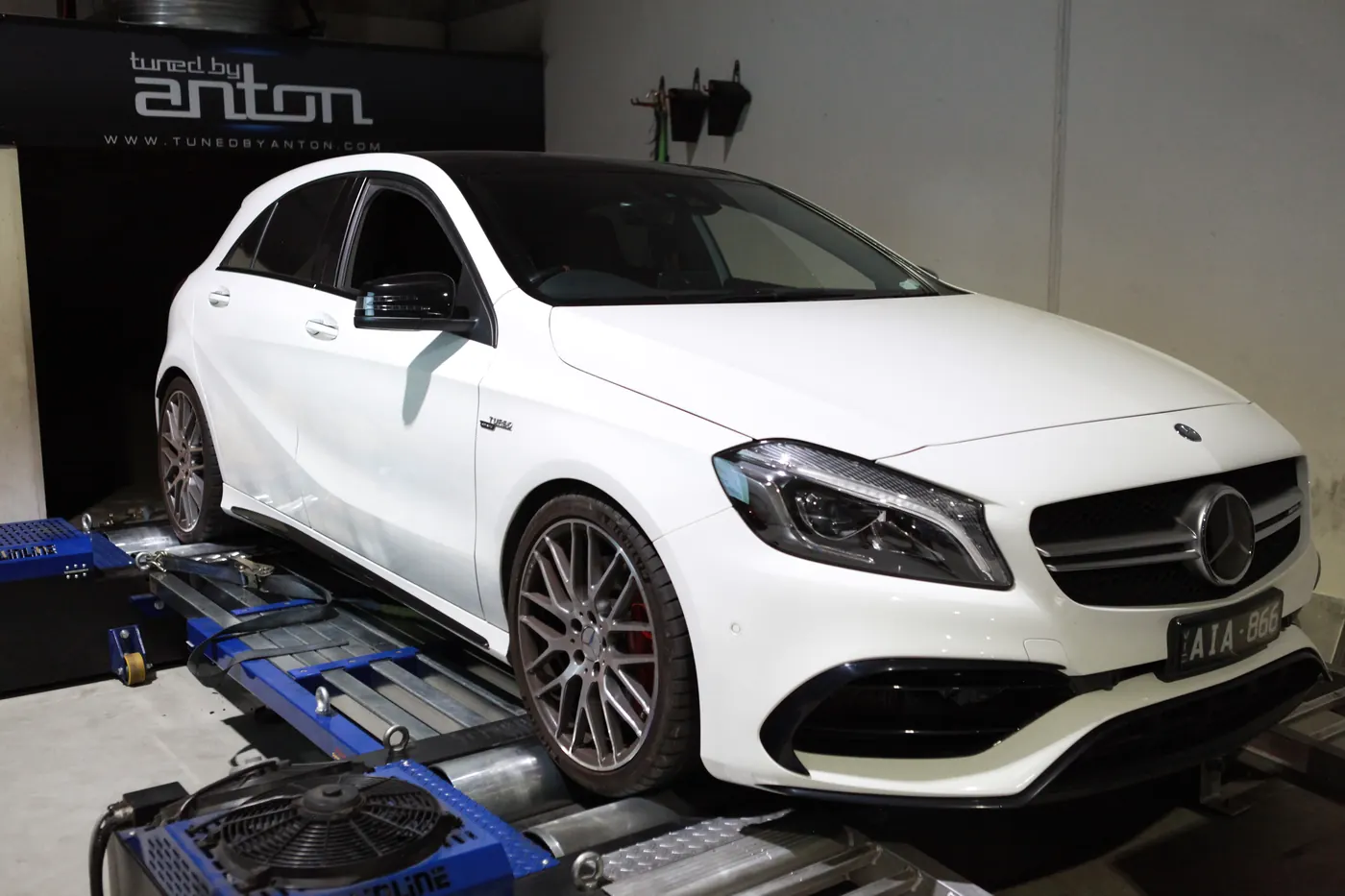
Photographs of Mercedes-Benzs from the workshop years. They are not all Mercedes-AMG M133 cars — the archive spans fifteen years and does not record which engine is in which photograph.
-
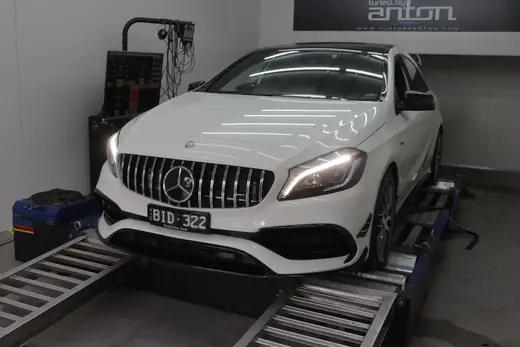
Mercedes-Benz A45 AMG -
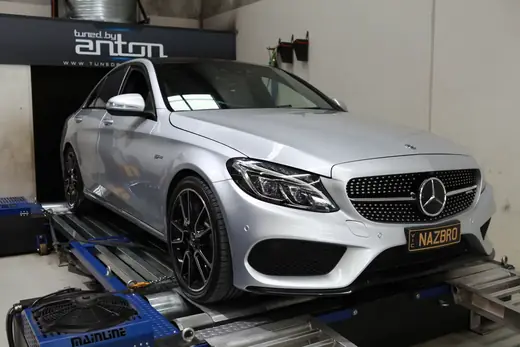
Mercedes-Benz C250 -
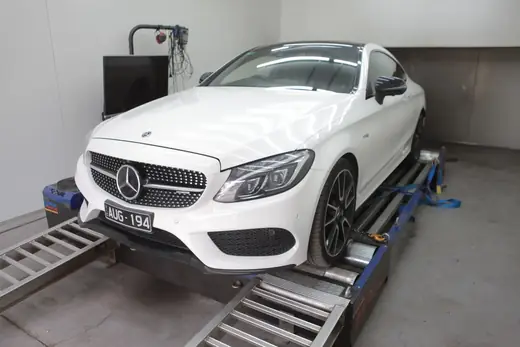
Mercedes-Benz C43 AMG -
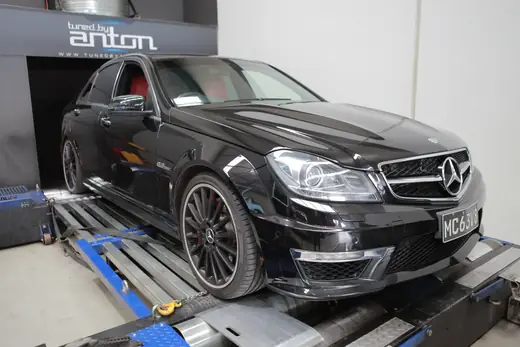
Mercedes-Benz C63
Photographs from the former Tuned By Anton workshop, 2015–2025. See the full gallery
