
Knock retard and timing pull under load
Timing that disappears under load is the knock control system protecting the engine — the question is whether the trigger is real detonation or a false read.
Timing that disappears under load is the knock control system protecting the engine — the question is whether the trigger is real detonation or a false read.
- Category
- Ignition & knock
- Typically affects
- Turbocharged and high-compression petrol (off-road / competition use)
What the workshop sees
Ignition advance drops away under load and power softens, sometimes varying tank to tank or with ambient heat. Logs show knock retard (knock correction) being pulled, steadily or in spikes, and timing not returning to the commanded value.
What is actually happening
Knock control listens to the knock sensors and, when it detects what it reads as detonation, retards ignition timing to protect the engine. Pulled timing under load therefore has two possible roots. The first is genuine knock: too much advance for the fuel octane, high intake air temperatures, a lean mixture, carbon hot-spots, or simply more cylinder pressure than the fuel can tolerate. The second is a false read: mechanical noise (injectors, valvetrain, a loose accessory) sitting in the knock sensor's frequency window, which the system mistakes for detonation and reacts to anyway.
Calibrating the timing without first telling these apart either leaves the engine exposed or throws away safe power.
How it is addressed
Separate real knock from a false read first. Real knock tracks with octane, intake air temperature, load and AFR; a false read tends to be RPM- or noise-linked and consistent regardless of fuel or heat. The fuel actually in the tank (98 RON, an E85 blend, and so on) has to match what the calibration assumes.
If it is real, bring the base ignition timing back to what the fuel and conditions support, address the contributors (mixture under load, intake air temperature management), and leave the knock system its margin as a safety net — not as a substitute for a correct base map. If it is a false read, the knock-detection windowing/sensitivity is the area to review so the system stops reacting to mechanical noise.
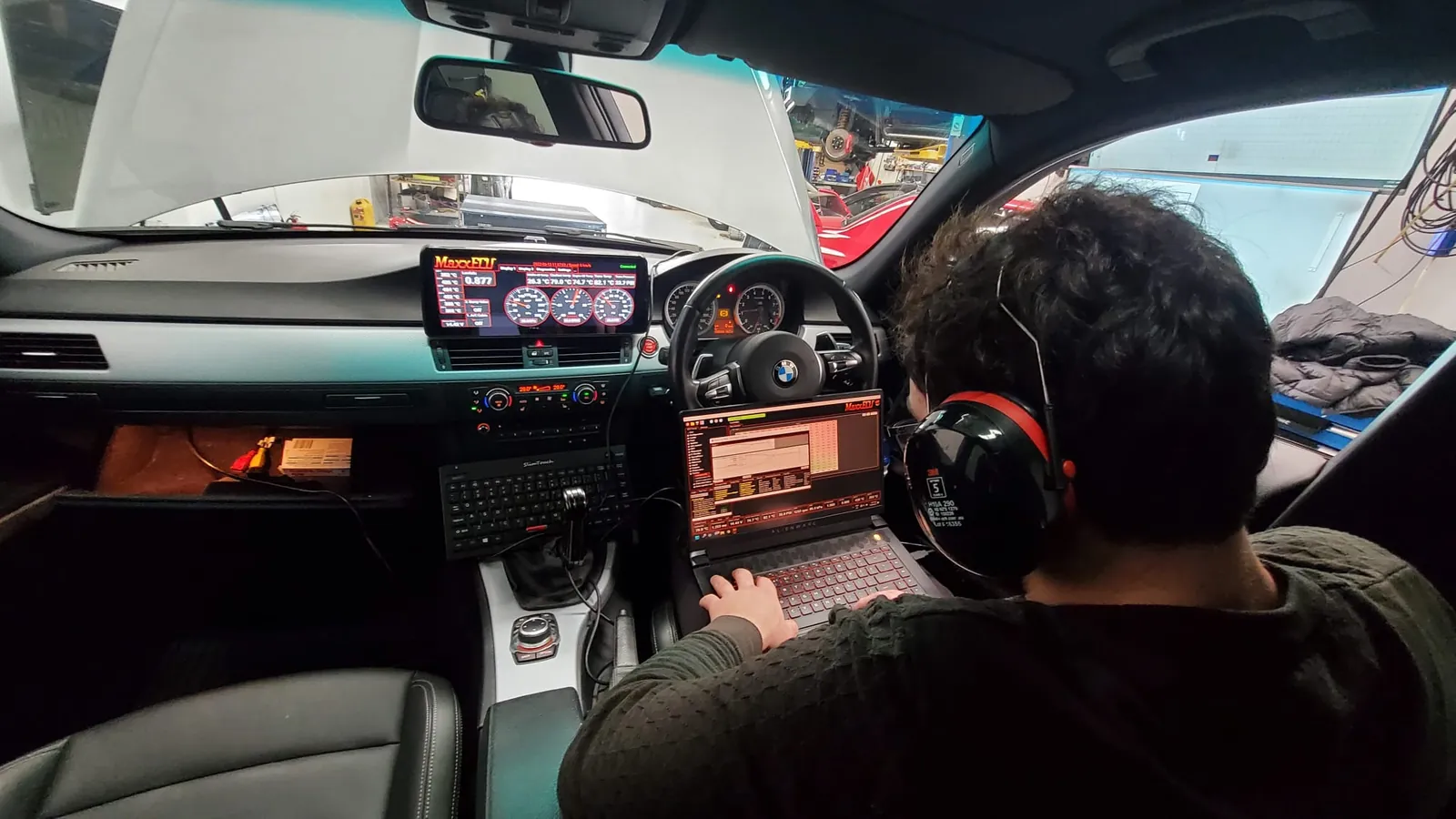
Verify against logged commanded vs actual ignition timing, knock retard/correction per cylinder, intake air temperature, AFR/lambda and fuel type. A good result holds the commanded timing under load with the knock system quiet, repeatably and across heat.
Questions workshops ask
Is knock retard always real detonation?
No. It can be a false read where mechanical noise falls in the knock sensor's frequency window. Real knock tracks with octane, heat, load and mixture; a false read is usually noise- or RPM-linked regardless of fuel.
Will higher-octane fuel stop the timing pull?
If the cause is genuine knock from insufficient octane, the right fuel helps — but the calibration has to assume the fuel actually in the tank. It will not fix a false read.
Should the knock system be turned down to keep timing?
Not as a first move. The base timing is set to what the fuel and conditions support and the knock system is left as a safety margin; sensitivity is only reviewed once a false read is confirmed.
Where this fits
Approved workshops can submit the file and logs and we will develop the calibration with you. Relevant services: ECU tuning files · Fuel & octane guide. See validated results in the dyno results.
Engines we calibrate where this commonly comes up: BMW N54 · Mitsubishi 4G63 · Toyota 2JZ-GTE · Nissan RB26DETT · Holden LS V8 · BMW B58 · BMW N55 · BMW S58 · BMW S55 · Mercedes-AMG M156 · Mercedes-AMG M177 / M178 · Mercedes-AMG M139 · Subaru FA20DIT (WRX) · Mercedes-AMG M133 · Ford Ranger Raptor 3.0 V6 EcoBoost · Subaru EJ (WRX / STI) · VW / Audi EA888 · Nissan SR20DET · Nissan RB25DET · Nissan VR38DETT · Mitsubishi 4B11T · Toyota 1JZ-GTE · Honda K-Series · Toyota 86 / Subaru BRZ (FA20) · Mazda 13B Rotary · Ford Coyote 5.0 V8.
See the engineering in practice: Subaru EJ25 Aircraft Engine on MoTeC M1.
Stuck on this on a live build?
Upload the stock read and your logs — we will work it until the data is clean.
