
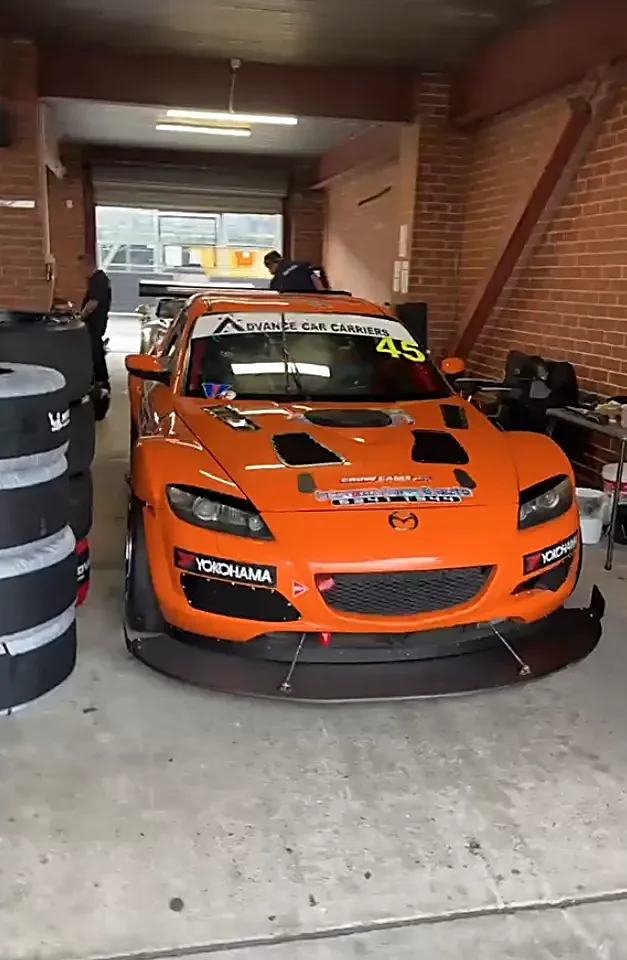
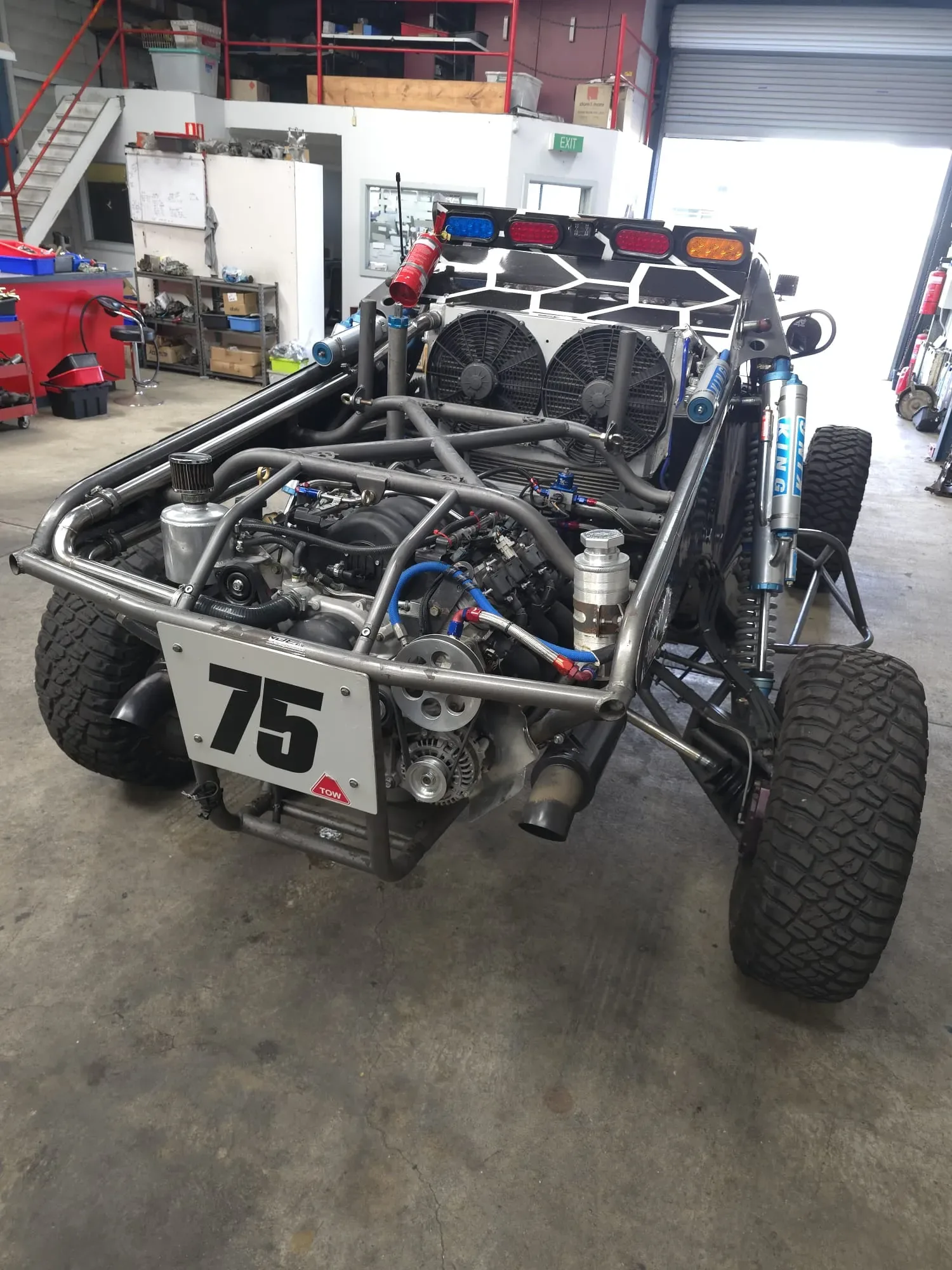
LS V8 off-road race buggy — calibrating an engine that runs inverted
A tube-frame off-road race buggy on a 6.0L LS V8 and Haltech Rebel LS standalone management — 272.6 kW and 313.3 Nm at the wheels, where the real calibration work was a protection strategy for a vehicle that is regularly driven on two wheels and occasionally ends a run upside down.
What the project set out to do
Calibrate a mid-mounted 6.0L LS V8 in a tube-frame off-road race buggy on Haltech Rebel LS standalone management — for a usable torque plateau on loose surfaces, and for an engine-protection program suited to an operating environment that does not keep the vehicle upright.
The engineering problem
Most calibration work is about making an engine produce more. This one is mostly about making sure it survives, and that changes what is worth spending time on.
On loose surfaces, traction sets the pace rather than peak power, so a sharp peak is of little use — what matters is a broad, flat torque plateau the driver can lean on without breaking grip.
The harder problem is the operating environment. A race engine with full health monitoring is standard practice; a race engine that is regularly driven on two wheels and sometimes finishes a run inverted is not. Oil pressure and oil temperature limits set for a conventional installation assume the oil is sitting where the designer put it. Here, that assumption does not hold.
How it was calibrated
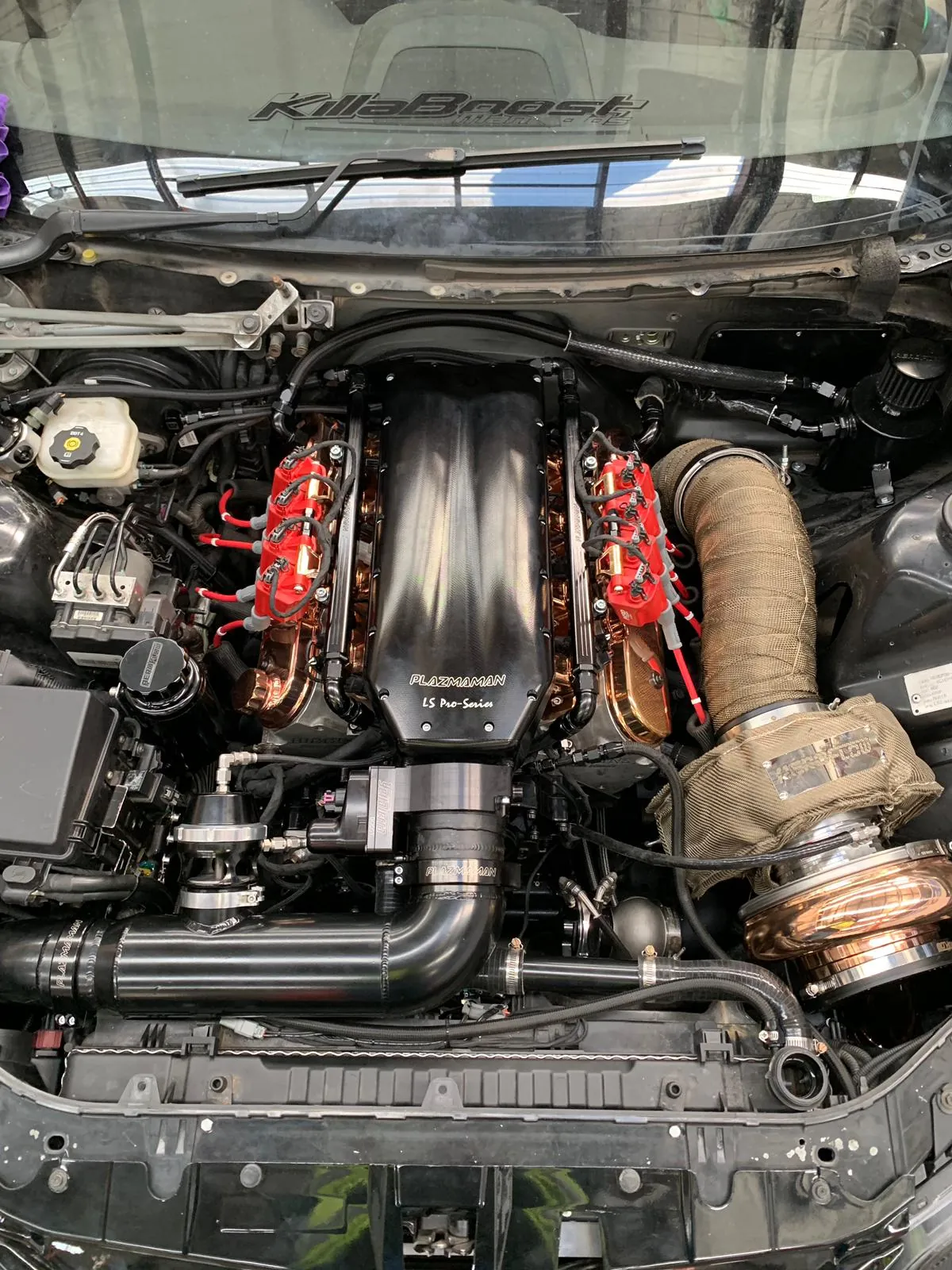
The hardware is straightforward: a 6.0L LS V8 with an aftermarket camshaft, 4-into-1 extractors and a cold-air intake, mid-mounted in a tube frame.
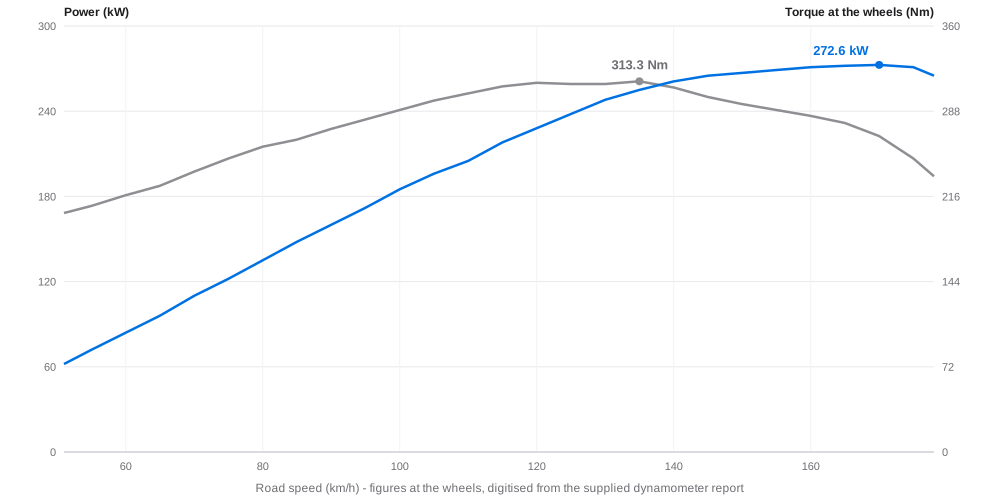
The calibration targeted a torque plateau rather than a peak. Torque crosses 300 Nm by 110 km/h and holds through to 140 km/h, peaking at 313.3 Nm, while power climbs steadily to 272.6 kW at the wheels near 170 km/h — no step, no hole and no sudden peak.
The engine-protection program is the part that earns its keep. Wideband lambda, knock, oil pressure, fuel pressure and oil temperature are all monitored, with strategies that intervene before damage rather than logging it afterwards. The oil thresholds in particular are set to protect the engine from the vehicle's own attitude, not only from load.
The result
272.6 kW and 313.3 Nm at the wheels, with torque held above 300 Nm across the 110-140 km/h band where the vehicle actually works. More importantly, a multi-sensor protection strategy that accounts for orientation as well as load.
Figures are at the wheels, digitised from the supplied dynamometer report. Calibrations are supplied for off-road and closed-circuit competition use.
Questions about this project
Why is the torque plateau more important than peak power here?
On loose surfaces traction sets the pace, not peak power. A broad plateau the driver can lean on is worth more than a sharp peak that simply breaks grip.
What does 'orientation-tolerant' protection actually mean?
Oil pressure and oil temperature limits normally assume the oil is sitting where the designer put it. This buggy is regularly driven on two wheels and sometimes finishes a run inverted, so the thresholds are set to protect the engine from its own attitude as well as from load.
Are these figures at the engine or at the wheels?
At the wheels, digitised from the supplied dynamometer report.
Is this a service you sell?
No. Specialist projects like this are evidence of calibration depth. Approved workshops calibrate directly with the same engineer; calibrations here are for off-road and closed-circuit competition use.
The engineering behind your workshop's calibrations
This kind of project is shared to show the depth behind the day-to-day work. Approved workshops calibrate directly with the same engineer. It is not a service sold to the public.
