
Ford Ranger 2.0 Bi-Turbo Tuning & Calibration
The 2.0 bi-turbo 'Panther' punches well above its capacity in the Ranger and Everest, and it lives or dies on how its sequential turbos and 10-speed auto are calibrated.
Ford Ranger / Everest 2.0L Bi-Turbo Diesel (Panther)
The Ford Ranger and Everest 2.0L bi-turbo diesel is calibrated on PCMTec, focused on EGT-safe fuelling, sequential twin-turbo boost control, and the 10-speed automatic so it holds gear and torque cleanly. Every file is developed from the stock read and validated against logged exhaust temperature, boost and rail data — a small, hard-working diesel where thermal margin and transmission behaviour matter.
What the Ford Ranger 2.0 Bi-Turbo needs from a calibration
The 2.0-litre bi-turbo 'Panther' diesel — in the Ranger, Raptor (PX3) and Everest — makes strong outputs for its capacity by running two turbochargers in sequence: a small high-pressure charger for low-down response handing over to a larger one up top. That sequential handover is a real calibration axis, and getting it smooth is central to how the engine drives.
Because it's a small, hard-worked diesel, exhaust gas temperature discipline is critical — there's less thermal mass to forgive an over-fuelled map. The calibration shapes fuelling around safe EGT under load and verifies it on logged data, so the extra torque comes without extra thermal risk towing or touring.
The 10-speed automatic behind it is the other half of the job. Torque limits and shift behaviour are calibrated so the box holds the added torque and doesn't hunt through its many ratios. Treated as one system and validated on logs, the 2.0 bi-turbo becomes a genuinely strong, drivable tow and touring package.
What we calibrate it on
PCMTec
The Ford flash standard for Ranger/Everest ECUs — full access to fuelling, sequential boost and the 10-speed transmission tables.
Custom diesel calibration
Developed from the stock read into an EGT-safe custom file for the 2.0 bi-turbo.
Datalog review
EGT, boost and rail-pressure logs reviewed to verify the calibration under real towing load.
What the work concentrates on
EGT-safe fuelling
Fuelling shaped around safe exhaust gas temperature — critical on a small, hard-worked diesel with less thermal mass to forgive it — verified on logged EGT.
Sequential-turbo boost
The high- and low-pressure turbo handover calibrated so boost comes in smoothly and holds target across the range.
10-speed auto tuning
Torque limits and shift behaviour calibrated so the 10-speed holds the added torque and doesn't hunt through its ratios.
Towing response
Low-down response and mid-range torque calibrated for towing and touring, verified under real load rather than a free pull.
Where the Ford Ranger 2.0 Bi-Turbo catches workshops out
EGT on a small hard-worked diesel
Less thermal mass means less margin. Fuelling is shaped conservatively around safe exhaust temperature and verified on logged EGT so the extra torque doesn't add thermal risk.
Sequential-turbo handover
The changeover between the two turbos can feel stepped. Boost control is calibrated so the handover is smooth and boost holds target across the range.
10-speed hunting or slipping
The many-ratio auto can hunt or give torque back. Shift behaviour and torque limits are calibrated with the engine so it holds gear and power cleanly.
Symptom → cause → calibration logic for the issues above:
More in the calibration problem library.
Ford Ranger 2.0 Bi-Turbo calibration — questions workshops ask
What do you tune the 2.0 bi-turbo on?
PCMTec — the Ford flash standard for Ranger and Everest, with full access to fuelling, the sequential-turbo boost control and the 10-speed transmission tables.
Do you tune the 10-speed automatic too?
Yes. On a torque-rich 2.0 bi-turbo the 10-speed has to be calibrated with the engine — torque limits and shift behaviour — so it holds the power and doesn't hunt through its ratios.
Is it safe on such a small diesel?
With discipline, yes. There's less thermal margin than a big diesel, so fuelling is shaped conservatively around safe EGT and verified on logged data — response and torque without added thermal risk.
What do you need from my workshop?
The stock ECU read plus data logs — EGT, boost and rail pressure under real load. We develop and validate the calibration from that and revise until confirmed safe and stable.
Calibrate a Ford Ranger 2.0 Bi-Turbo with us behind you
Your workshop reads the ECU and logs the car; we develop and validate the calibration from your data. See real Ford results in the Ford dyno results. Calibrations are for off-road, competition and towing use; accounts are manually reviewed.
Ford through the workshop
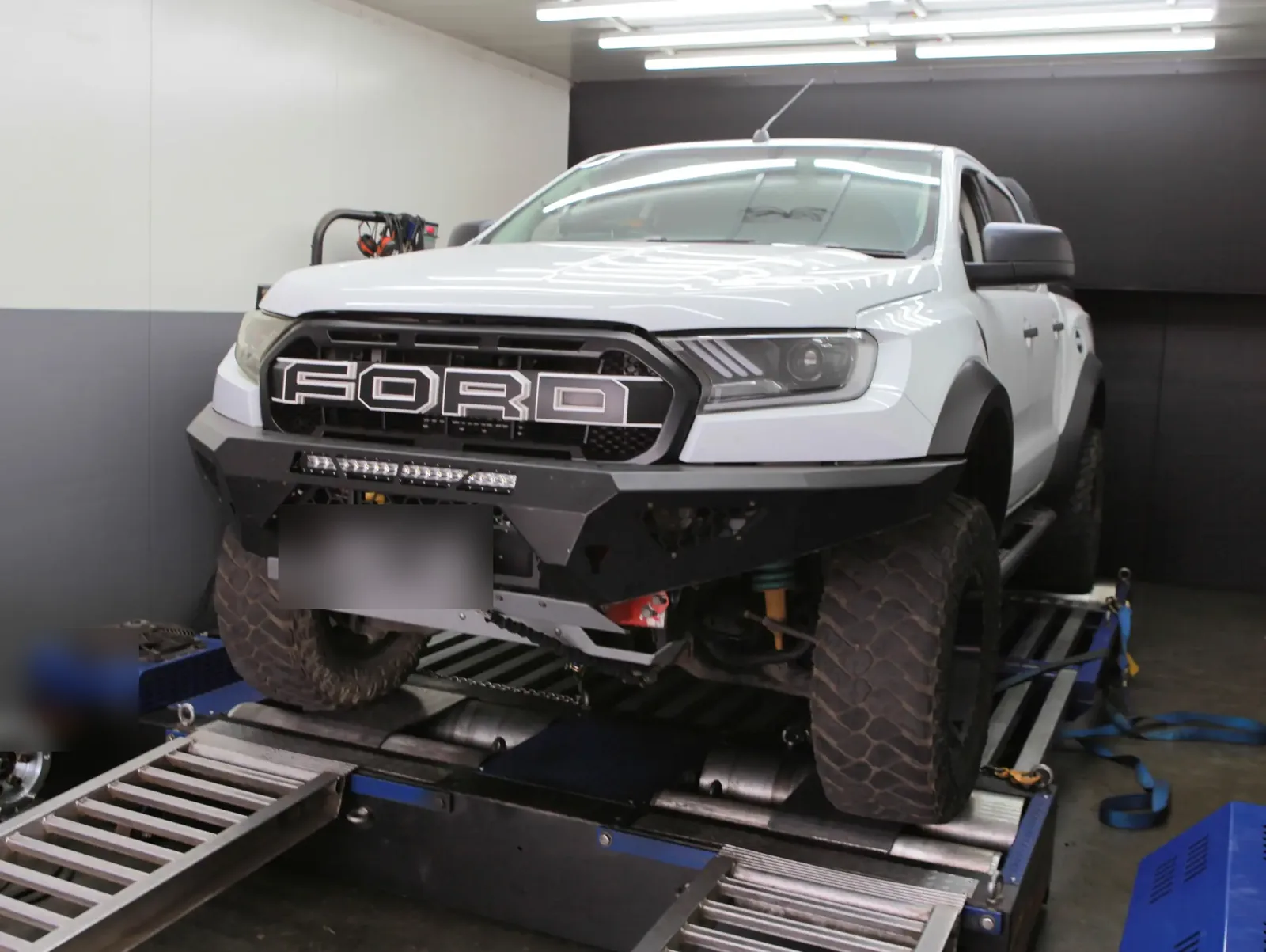
Photographs of Fords from the workshop years. They are not all Ford Ranger 2.0 Bi-Turbo cars — the archive spans fifteen years and does not record which engine is in which photograph.
-
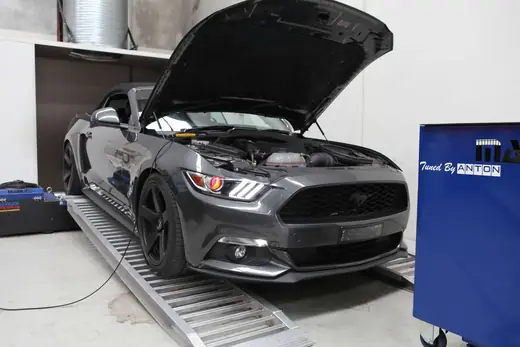
Ford EcoBoost -
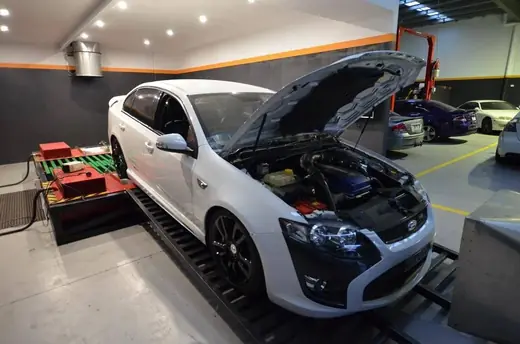
Ford Falcon -
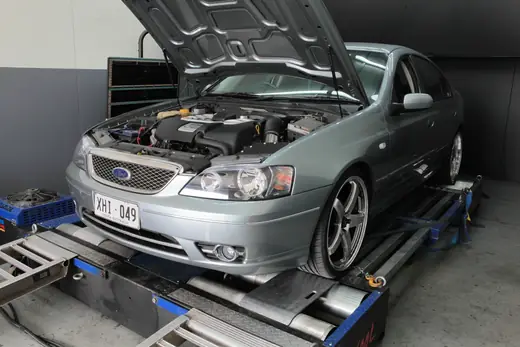
Ford Falcon BF V8 -
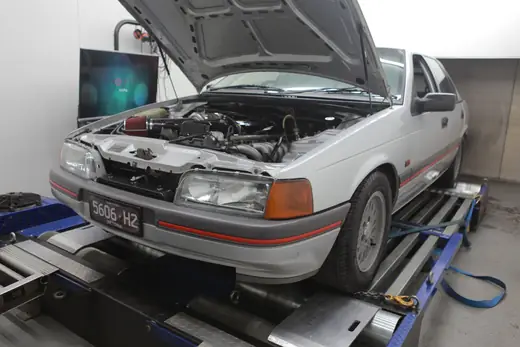
Ford Falcon EA
Photographs from the former Tuned By Anton workshop, 2015–2025. See the full gallery
